


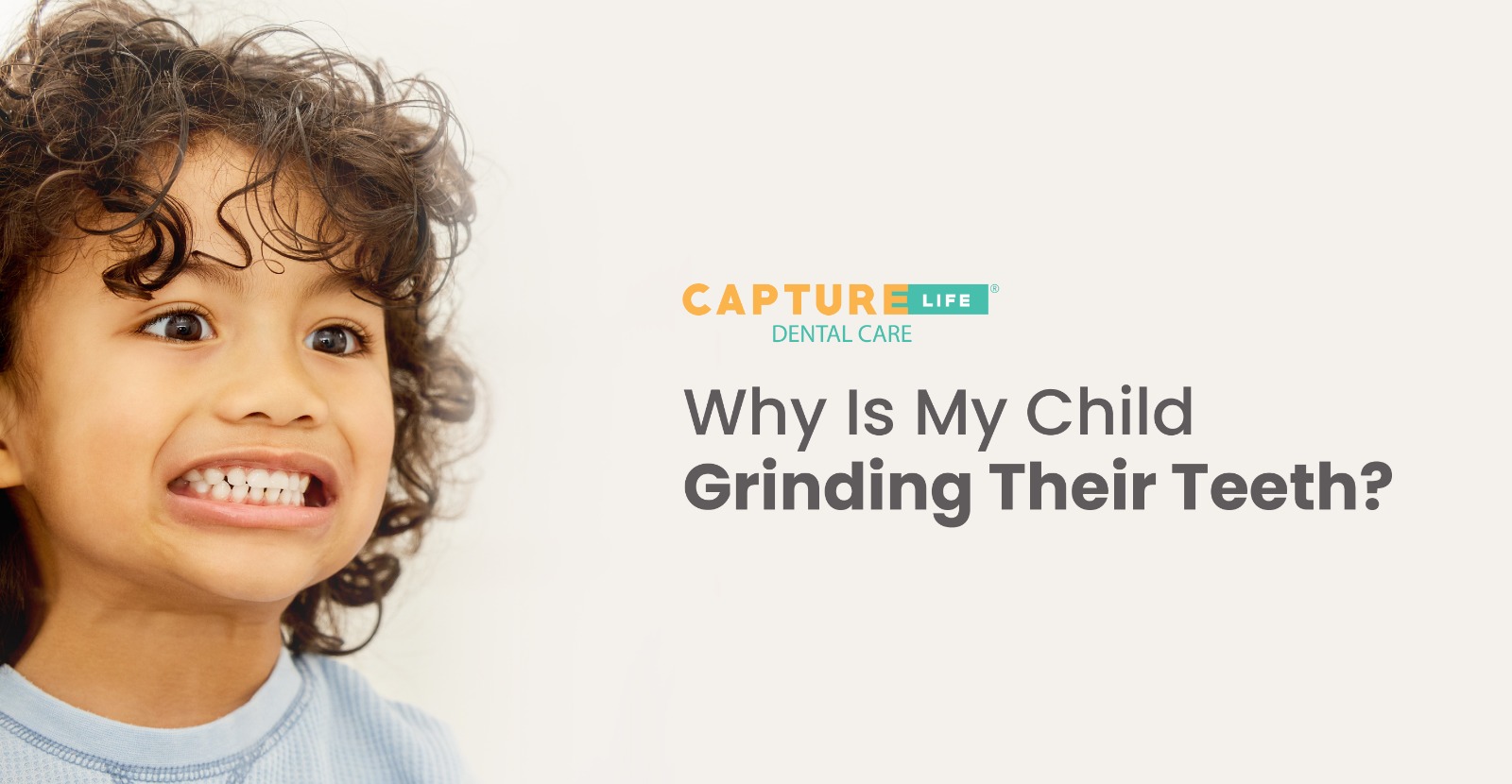
06 Jul Why Is My Child Grinding Their Teeth?
Many parents are surprised to hear the sound of their child grinding their teeth during sleep. While it can be concerning, teeth grinding, also known as bruxism, is common in children and is often a temporary part of growing up.
In many cases, it resolves on its own as your child’s teeth and jaws develop. However, persistent grinding, especially after permanent teeth erupt, may require a dental evaluation to rule out underlying issues and prevent long-term wear.
A child’s mouth undergoes constant changes as they grow. Baby teeth loosen and fall out, permanent teeth erupt, and the jaws continue to develop. During this time, the brain is continually adapting to these changes and learning how the upper and lower teeth fit together.
Teeth grinding is often part of this natural developmental process. Many children experience a phase of grinding during sleep, and it usually stops once the teeth and bite have settled.
Does Poor Sleep Make Teeth Grinding Worse?
Sleep quality plays an important role in childhood bruxism. Teeth grinding often occurs during lighter stages of sleep rather than deep, restorative sleep. Conditions that interrupt sleep, such as snoring, mouth breathing, or frequent awakenings, can increase the likelihood of grinding.
Children who regularly snore, breathe through their mouth at night, or wake up feeling tired despite getting enough sleep may benefit from an assessment by a pediatrician. In many cases, improving sleep quality helps reduce teeth grinding.
Can Stress Cause My Child to Grind Their Teeth?
Stress and anxiety can contribute to teeth grinding, but they are rarely the only cause.
Some children grind their teeth during periods of emotional change, such as starting a new school, moving home, or adjusting to a new routine. Once the situation settles, the grinding often improves as well.
However, many children grind their teeth even when there are no obvious signs of stress. Developmental changes, sleep quality, and physical discomfort can all contribute independently.
Can Pain or Medication Cause Teeth Grinding?
Sometimes, teeth grinding is a child’s response to discomfort they may not be able to express. Ear infections, erupting molars, or soreness in the mouth can all trigger grinding during sleep.
Certain medications may also list bruxism as a possible side effect. If the grinding began after your child started a new medication, discuss it with the prescribing doctor.
Is Teeth Grinding Damaging My Child’s Teeth?
In children with only baby teeth, mild grinding rarely causes lasting damage. Baby teeth are temporary, and a certain amount of wear is usually not a concern.
Once permanent teeth erupt, however, ongoing grinding can begin to affect the enamel. Over time, you may notice:
- Flattened or worn tooth edges
- Increased sensitivity to hot or cold foods
- Jaw soreness, especially in the morning
- Morning headaches
If your child experiences any of these symptoms, it’s a good idea to schedule a dental examination. Early assessment allows the dentist to determine whether treatment is needed before significant damage occurs.
How Can I Help My Child Stop Grinding Their Teeth?
For younger children, treatment is often unnecessary. Maintaining healthy sleep habits, including regular bedtimes, limiting screen time before bed, and establishing a calming bedtime routine, can help reduce grinding episodes.
If stress appears to be a contributing factor, addressing the underlying cause can also make a difference.
For older children whose permanent teeth are showing signs of wear, your dentist may recommend a custom-made night guard. While a night guard does not stop the grinding itself, it protects the teeth by absorbing the forces generated during sleep.
The Bottom Line
The occasional sound of your child grinding their teeth at night is usually nothing to worry about. In most cases, it is a normal part of growth and development that resolves naturally as their teeth and jaws mature.
However, if the grinding continues after permanent teeth have erupted, is accompanied by jaw pain, headaches, tooth sensitivity, or noticeable wear, it is worth having your child assessed by a paediatric dentist. Early evaluation can identify any underlying causes and, if needed, help protect your child’s teeth before long-term damage occurs.
At CLDC, our dental team can determine whether your child’s teeth grinding is simply a developmental phase or whether treatment is needed, ensuring they maintain a healthy, comfortable smile as they grow.
FAQs
1. Is it normal for children to grind their teeth?
Yes. Teeth grinding, or bruxism, is common in children and is often a normal part of their dental development. Many children outgrow the habit as their teeth and jaws mature.
2. Will teeth grinding permanently damage my child’s teeth?
In most cases, grinding does not cause permanent damage to baby teeth. However, if permanent teeth are involved, prolonged grinding can lead to enamel wear, tooth sensitivity, or jaw discomfort. A dental examination can determine whether treatment is needed.
3. Does my child need a night guard?
Not always. Most children do not require a night guard. It is typically recommended only when a dentist identifies significant wear on the permanent teeth or believes additional protection is necessary.
4. Is stress the main cause of teeth grinding?
Stress can contribute to teeth grinding, but it is rarely the only cause. Sleep disturbances, jaw development, erupting teeth, and oral discomfort can also play a role. Your dentist can help identify the likely cause based on your child’s symptoms.
5. When do children usually stop grinding their teeth?
There is no fixed age. Many children stop grinding as their permanent teeth erupt and their bite stabilises, while others may continue into adolescence. Regular dental check-ups help ensure the grinding is not affecting their oral health.
6. When does it usually stop?
Hard to say exactly. Many children stop as the permanent teeth settle. Others grind well into their teens. There’s quite a range, and no reliable way to predict it for a specific child.