


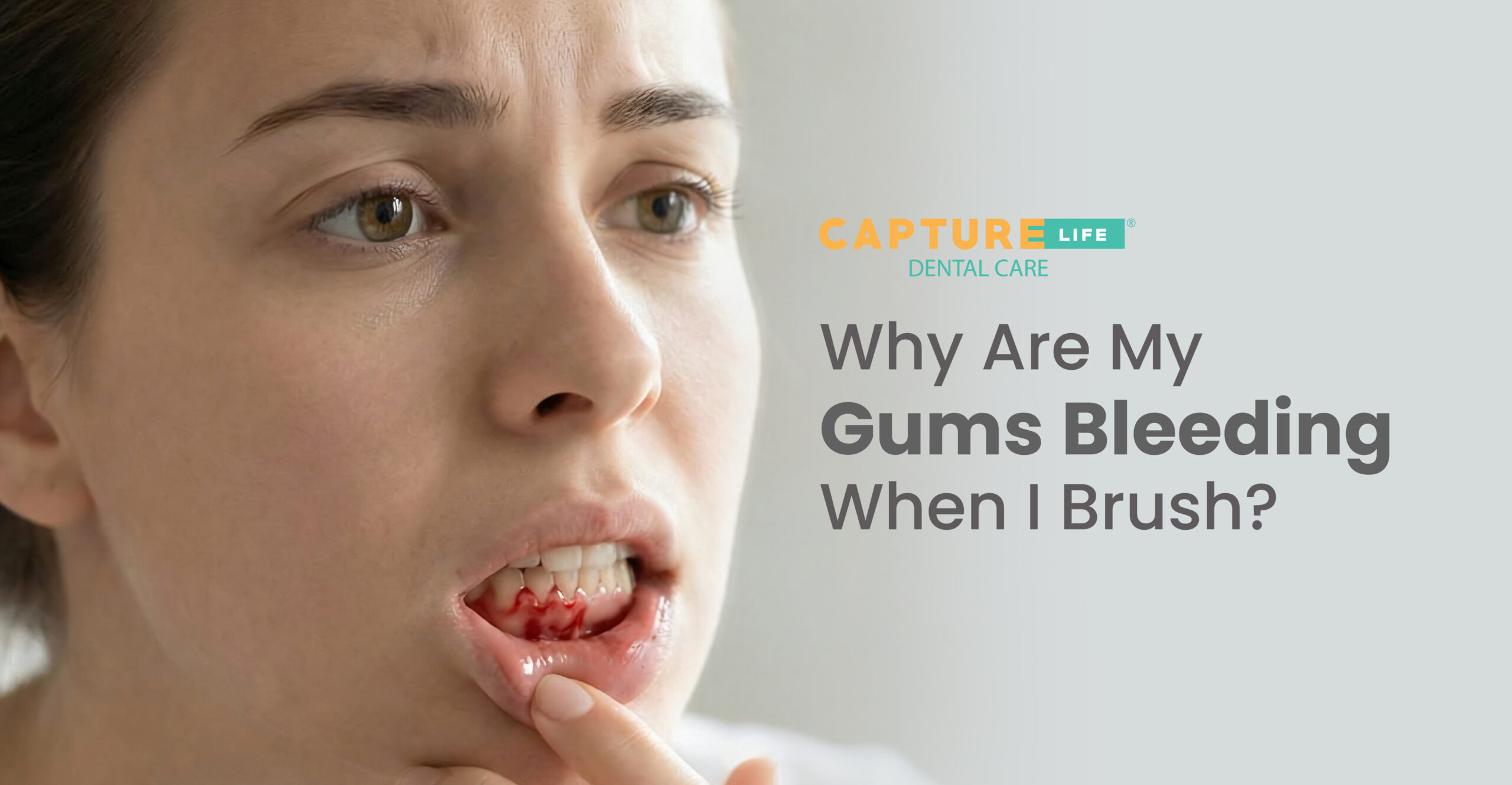
08 Oct Why Are My Gums Bleeding When I Brush?
You’re brushing your teeth as usual when you notice a little pink or red in the sink. It may not hurt, but it is enough to make you wonder: Why are my gums bleeding?
Bleeding gums can happen for several reasons. Sometimes, something as simple as brushing too hard may irritate them. In other cases, regular bleeding can be a sign of plaque build-up or inflammation that needs attention.
Let’s look at some of the common causes of bleeding gums, what you can do about them and when it is worth speaking to your dentist.
What Causes Bleeding Gums?
1. Plaque and Tartar Build-Up
Even if you brush every day, plaque can accumulate in areas that are easy to miss, particularly around the gumline and between your teeth causing plaque-buildup.
Plaque is a sticky film of bacteria that constantly forms on your teeth. When it is not removed effectively through brushing and cleaning between the teeth, it can irritate your gums. They may become red, swollen, tender and more likely to bleed.
When plaque is not removed, it can eventually harden into tartar, which cannot be effectively removed with regular brushing at home.
2. Gingivitis
Gingivitis is an early form of gum disease caused by inflammation of the gums.
Apart from bleeding while brushing or flossing, you may notice:
Red or swollen gums
Tenderness around the gumline
Persistent bad breath
Increased sensitivity around the gums
The good news is that gingivitis can often be managed when identified early with better oral hygiene and appropriate professional dental care. If the symptoms continue, however, it is important to have your gums assessed rather than simply waiting for them to improve.
3. Brushing Too Hard
When it comes to brushing, harder does not necessarily mean cleaner.
Brushing aggressively or using a hard-bristled toothbrush can irritate your gums and may contribute to bleeding.
Instead, use a soft-bristled toothbrush and gentle, controlled movements. The aim is to remove plaque effectively without putting unnecessary pressure on your gums.
4. A Change in Your Flossing Routine
Have you recently started flossing after not doing it regularly for a while?
You may initially notice some bleeding, particularly if your gums are already inflamed.
That does not necessarily mean you should stop cleaning between your teeth. In fact, these are areas your toothbrush cannot always reach effectively. Be gentle and consistent, and if the bleeding continues, speak to your dentist.
5. Hormonal Changes
Changes in hormone levels can sometimes make the gums more sensitive to plaque and inflammation.
This may occur during pregnancy, puberty or other periods of hormonal change.
If you notice that your gums have become more sensitive, swollen or prone to bleeding, mention it to your dentist so they can assess whether you need any additional care.
6. Certain Medications or Health Conditions
Some medications and medical conditions can affect your gums or make bleeding more likely.
If your gums have suddenly started bleeding, or continue to bleed despite maintaining good oral hygiene, let your dentist know about any medications you take and relevant changes in your health.
This can help them understand the bigger picture before recommending the next steps.
Should You Stop Brushing If Your Gums Are Bleeding?
Usually, no. Not brushing may allow more plaque to accumulate and make gum inflammation worse.
Instead, be gentler with your routine:
Use a soft-bristled toothbrush.
Avoid scrubbing your teeth and gums aggressively.
Clean carefully along the gumline.
Continue cleaning between your teeth.
Speak to your dentist if the bleeding continues or frequently returns.
The aim is not to avoid your gums because they bleed. It is to keep them clean without causing unnecessary irritation.
How Can You Stop Your Gums From Bleeding?
The right approach depends on why your gums are bleeding. However, improving your everyday oral care is a good place to start.
1. Brush Twice a Day
Brush twice daily with fluoride toothpaste and a soft-bristled toothbrush. Pay particular attention to the gumline, but avoid applying excessive pressure.
Good brushing is more about technique and consistency than force.
2. Clean Between Your Teeth
Your toothbrush cannot effectively reach every surface between your teeth.
Regular flossing or another interdental cleaning method can help remove plaque from these areas and support healthier gums.
If you are unsure which method is right for you, your dentist can guide you.
3. Be Gentle With Your Gums
If your gums are already sensitive or inflamed, aggressive brushing can make them feel worse.
Rather than brushing harder, slow down and focus on cleaning each area thoroughly but gently.
4. Consider a Professional Dental Cleaning
Once plaque has hardened into tartar, you cannot simply brush it away at home.
A professional dental cleaning can remove tartar and plaque from areas that may be difficult to reach with your usual brushing and flossing routine.
Your dentist can also assess whether the bleeding is related to gingivitis or another gum concern that needs attention.
5. Pay Attention to Persistent Bleeding
If your gums bleed once, there may be a simple explanation.
If they bleed every day or almost every time you brush, it is worth finding out why.
Persistent bleeding is your cue to have your gums assessed rather than continuing to manage the symptom at home without knowing the cause.
When Should You See a Dentist About Bleeding Gums?
An occasional small amount of bleeding does not always indicate a serious dental problem. However, if it happens regularly or appears alongside other symptoms should not be ignored.
Consider seeing your dentist if you notice:
Gums that regularly bleed when brushing or flossing
Red, swollen or tender gums
Persistent bad breath
Gums pulling away from your teeth
Loose or shifting teeth
Pain or discomfort when chewing
Bleeding that continues despite improving your oral hygiene
Your dentist can examine your gums, check for plaque and tartar build-up, and identify whether there is an underlying gum condition that needs treatment.
Can Bleeding Gums Be a Sign of Gum Disease?
Yes. Bleeding gums can be an early sign of gum disease, particularly gingivitis.
Gingivitis causes inflammation of the gums. If gum disease progresses, it can develop into periodontitis, a more advanced condition that affects the tissues and bone supporting your teeth.
However, seeing blood when you brush does not automatically mean you have advanced gum disease.
Think of bleeding as a sign worth paying attention to. Finding out what is causing it is more useful than assuming the worst.
Can Bleeding Gums Lead to a Serious Condition?
The bleeding itself is not usually the main concern. What matters is why your gums are bleeding and whether the underlying cause is being addressed.
For example, persistent gum inflammation may progress from gingivitis to periodontitis. In advanced cases, periodontitis can damage the tissues and bone supporting the teeth and may eventually contribute to tooth loss.
There are also recognised associations between gum disease and aspects of overall health, although these relationships are complex. Bleeding gums themselves should not be taken to mean that you have, or will develop, another health condition.
So, there is no need to panic when you notice a little blood. But if it keeps happening, it is worth finding out why.
How Can You Prevent Bleeding Gums?
While not every cause of bleeding gums can be prevented, a consistent oral hygiene routine can go a long way towards keeping your gums healthy.
Brush twice daily with fluoride toothpaste.
Choose a soft-bristled toothbrush.
Clean between your teeth regularly.
Avoid brushing with excessive pressure.
Keep up with regular dental check-ups and professional cleanings as recommended.
Tell your dentist about medications or health changes that may affect your gums.
Do not ignore bleeding that keeps returning.
Healthy gums do more than keep blood out of the sink. They support your teeth and play an important role in maintaining your oral health over the long term.
The Bottom Line
A little blood while brushing can be easy to brush off, especially if nothing hurts. But if it happens regularly, your gums may be trying to tell you that they need some extra attention.
Plaque build-up and gingivitis are common causes, but brushing technique, hormonal changes, medications and other factors can also play a role.
Start by brushing gently, cleaning between your teeth and paying attention to whether the bleeding improves. If it continues or is accompanied by swelling, pain, persistent bad breath, gum recession or loose teeth, speak to your dentist.
At Capture Life Dental Care, we believe understanding what is happening is the first step towards taking better care of your smile. If your gums have been bleeding regularly, our team can assess what is causing it and guide you on the care your gums need.
Because healthy teeth begin with healthy gums.
Frequently Asked Questions
Is it normal for gums to bleed when brushing?
Bleeding should not be considered a normal part of brushing. It can occasionally happen for different reasons, but frequent or persistent bleeding may indicate gum inflammation or another concern that should be assessed by a dentist.
Why do my gums bleed even though I brush every day?
Daily brushing is important, but bleeding can still occur due to plaque left around the gumline or between teeth, gingivitis, brushing too hard, hormonal changes, medications or other factors. How you brush and whether you clean between your teeth also matter.
Should I keep brushing if my gums are bleeding?
In most cases, yes. Continue brushing gently with a soft-bristled toothbrush rather than avoiding the area altogether. If the bleeding persists, speak to your dentist.
Can brushing too hard make your gums bleed?
Yes. Excessive pressure can irritate the gums and contribute to bleeding. Using a soft-bristled toothbrush and gentle brushing technique can help reduce unnecessary irritation.
How long does it take for bleeding gums to improve?
It depends on what is causing the bleeding. If gum inflammation is related to plaque, improving your oral hygiene and receiving appropriate professional care may help. However, rather than relying on a particular timeline, have persistent or recurring bleeding assessed by your dentist.