


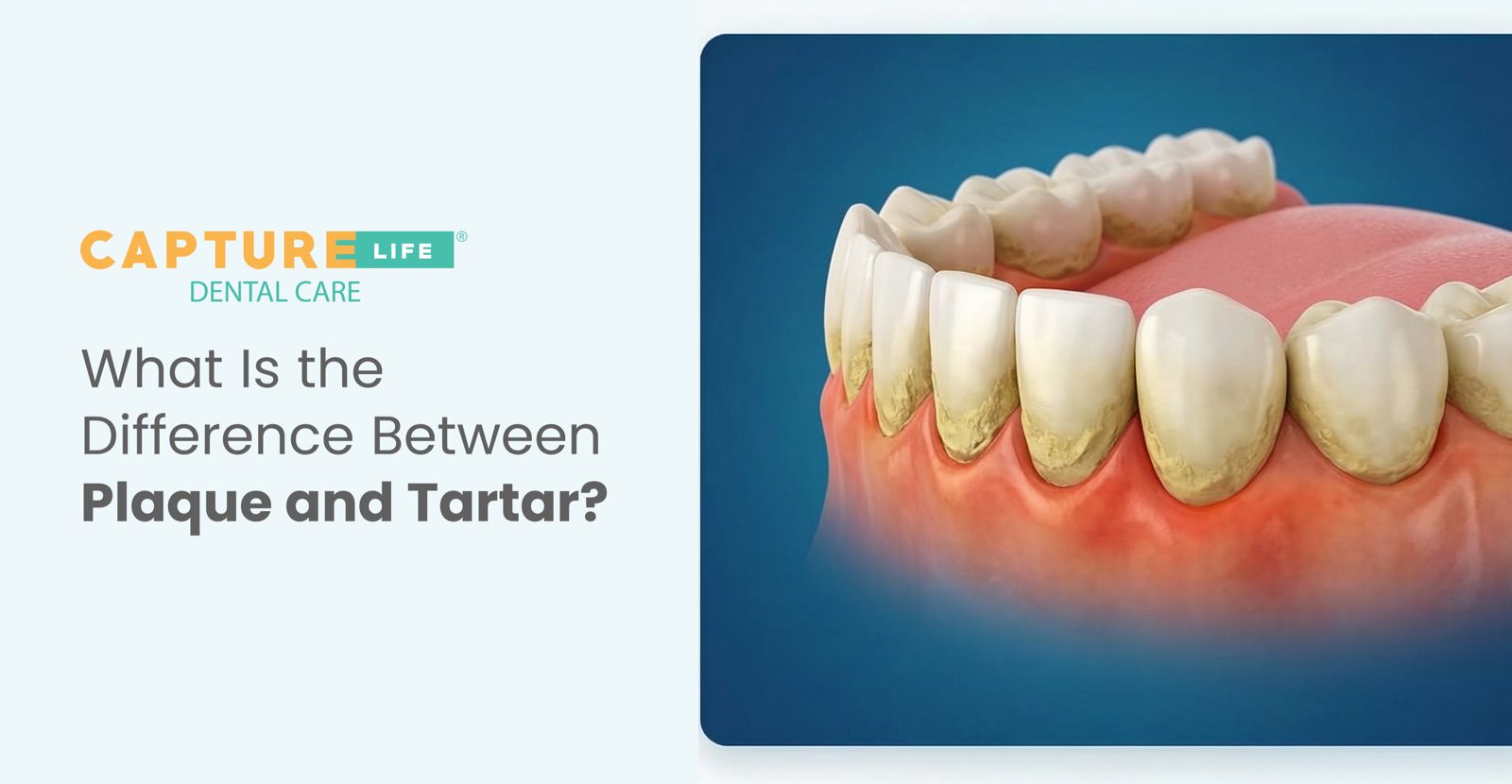
17 Nov What Is the Difference Between Plaque and Tartar?
Have you ever run your tongue over your teeth and felt a sticky coating? Or spotted a yellowish patch near your gums that stays put, no matter how carefully you brush?
Your first thought is probably: “How do I get rid of it?”
Before you reach for a different toothpaste or start brushing harder, it helps to know what you’re dealing with. Plaque and tartar are often mentioned together, but you can’t remove them in the same way.
What is Plaque?
Dental plaque is a thin layer of bacteria that forms on your teeth throughout the day. It’s usually colourless, so you may feel it before you see it. That slightly fuzzy coating when you run your tongue over your teeth can be plaque.
Everyone develops it. Having plaque doesn’t automatically mean you’re careless about your oral hygiene.
The trouble starts when it stays undisturbed. Bacteria in plaque use sugars from food and drinks to produce acids. Repeated acid exposure can weaken tooth enamel and eventually cause cavities. Plaque collecting along the gumline can also irritate your gums.
Brushing removes plaque from accessible tooth surfaces. Floss or a suitable interdental cleaner helps reach the spaces your toothbrush misses. Both matter, even when your teeth look clean.
What is Tartar?
When plaque remains on your teeth, minerals in saliva can gradually harden it into tartar, also called dental calculus.
Tartar attaches firmly to the tooth. You might notice a hard, rough deposit near the gumline, sometimes yellow or brown. It can also develop below the gums, where you cannot see it in the mirror.
Unlike the soft film you brush away, tartar stays put. Scrubbing harder won’t remove it.
Its rough surface also makes it easier for more plaque to collect. This is why professional cleaning and your daily routine work together: a dentist removes hardened deposits, while home care helps control fresh plaque.
Plaque vs tartar: the key differences
- Texture: Plaque is soft and sticky, while tartar is hard and rough.
- Appearance: Plaque is usually colourless and difficult to see. Tartar often looks yellow or brown, though it can be darker.
- Formation: Plaque forms as bacteria collect on your teeth. When it remains in place, minerals in saliva can harden it into tartar.
- Removal: Daily brushing and cleaning between your teeth remove plaque. Tartar needs professional removal by a dentist or dental hygienist.
- Effect on oral health: Plaque can cause cavities and gum inflammation. Tartar provides a rough surface for more plaque to collect, making your teeth harder to clean.
Colour alone cannot tell you which one you have. Staining can look similar, and deposits below the gums may be invisible. A dental examination gives you a clearer answer.
Why do I have build-up if I brush every day?
Brushing regularly is a good start, but the areas you reach matter too.
It’s easy to spend most of your brushing time on the front surfaces and hurry past the inner surfaces or back teeth. Crowded teeth can make cleaning awkward. If you don’t clean between your teeth, plaque can remain there despite twice-daily brushing.
People also differ in how quickly they develop deposits. Saliva composition, the bacteria present and dietary habits can influence this.
A better question is: which areas are being missed? Ask your dentist to show you. A small adjustment to your technique may be more helpful than buying another toothpaste.
Why remove build-up if your teeth don’t hurt?
Early gum inflammation, called gingivitis, may cause redness, swelling or bleeding when you brush. At this stage, professional care and consistent cleaning can usually reverse the inflammation.
Untreated gum disease can progress to periodontitis, which damages the tissues and bone supporting the teeth. Treatment then becomes more involved.
Bleeding is worth mentioning at your appointment, even if it doesn’t hurt. Persistent bad breath, receding gums or loose teeth also need assessment. These symptoms don’t prove that tartar is the only problem; they tell you it’s time to have your teeth and gums checked.
Can you remove tartar at home?
Once tartar has formed, brushing and flossing won’t remove it. Tartar-control toothpaste may help reduce new build-up, but it cannot take off an existing hardened deposit.
Avoid trying to scrape it away with metal tools or sharp objects. You can injure your gums and damage tooth surfaces without properly cleaning the area.
Mouthwash is not a substitute for brushing or cleaning between your teeth either. Your dentist may recommend a rinse for a particular reason, but it won’t replace professional tartar removal.
If a patch stays rough after brushing, arrange a check-up instead of repeatedly scrubbing it.
What happens during professional tartar removal?
Your dentist first checks the deposits and the condition of your gums. Tartar is removed through scaling, using dental instruments designed to clean tooth surfaces. Depending on your needs, these may include an ultrasonic scaler, hand instruments or both.
If gum disease has created deeper pockets around the teeth, you may need cleaning below the gumline, sometimes called scaling and root planing. This is different from a routine clean and is recommended after assessment.
Tell your dentist if your teeth are sensitive or you’re nervous about the procedure. They can explain what’s involved and discuss ways to keep you comfortable. You should also leave knowing how to clean the areas that tend to collect plaque.
How to remove plaque and reduce further build-up?
Removing plaque is a daily job because it keeps forming. These habits help you clean it away and reduce the chance of it hardening into tartar.
- Brush twice a day for two minutes: Use fluoride toothpaste and a soft-bristled toothbrush. Clean the outer, inner and chewing surfaces, paying attention to where the teeth meet the gums. Use gentle pressure.
- Clean between your teeth daily: Floss works well for many tight spaces. Interdental brushes may suit larger gaps. Ask your dentist which option and size are appropriate rather than forcing a brush between teeth.
- Notice how often you snack or sip sugary drinks: Sweetened chai through the afternoon or frequent biscuits at your desk mean repeated sugar exposure. Keeping sugary foods and drinks to mealtimes can help reduce this frequency.
- Replace worn toothbrush: Change it around every three to four months, or sooner if the bristles become frayed.
- Visit your dentist regularly: The right cleaning interval depends on your gum health and how quickly deposits return. Your dentist can recommend a schedule.
The Bottom Line
Plaque forms on everyone’s teeth. You can remove it by brushing twice a day and cleaning between your teeth daily. Once plaque hardens into tartar, it takes a professional cleaning to remove it.
If the same spot still feels rough after brushing, or your gums often bleed when you brush, book a check-up at Capture Life Dental Care. We can check what’s causing it and show you how to clean the areas your toothbrush tends to miss.
Frequently Asked Questions
Does tartar always hurt?
No. Deposits and early gum problems may develop without pain. Waiting for toothache can delay care for something that could have been addressed earlier.
How quickly does plaque turn into tartar?
The rate varies between people and different areas of the mouth. Rather than relying on a fixed deadline, remove plaque every day through brushing and interdental cleaning.
Will tartar come back after a cleaning?
It can. Cleaning removes existing deposits, but plaque continues to form. Daily care and follow-up appointments help manage further build-up.