


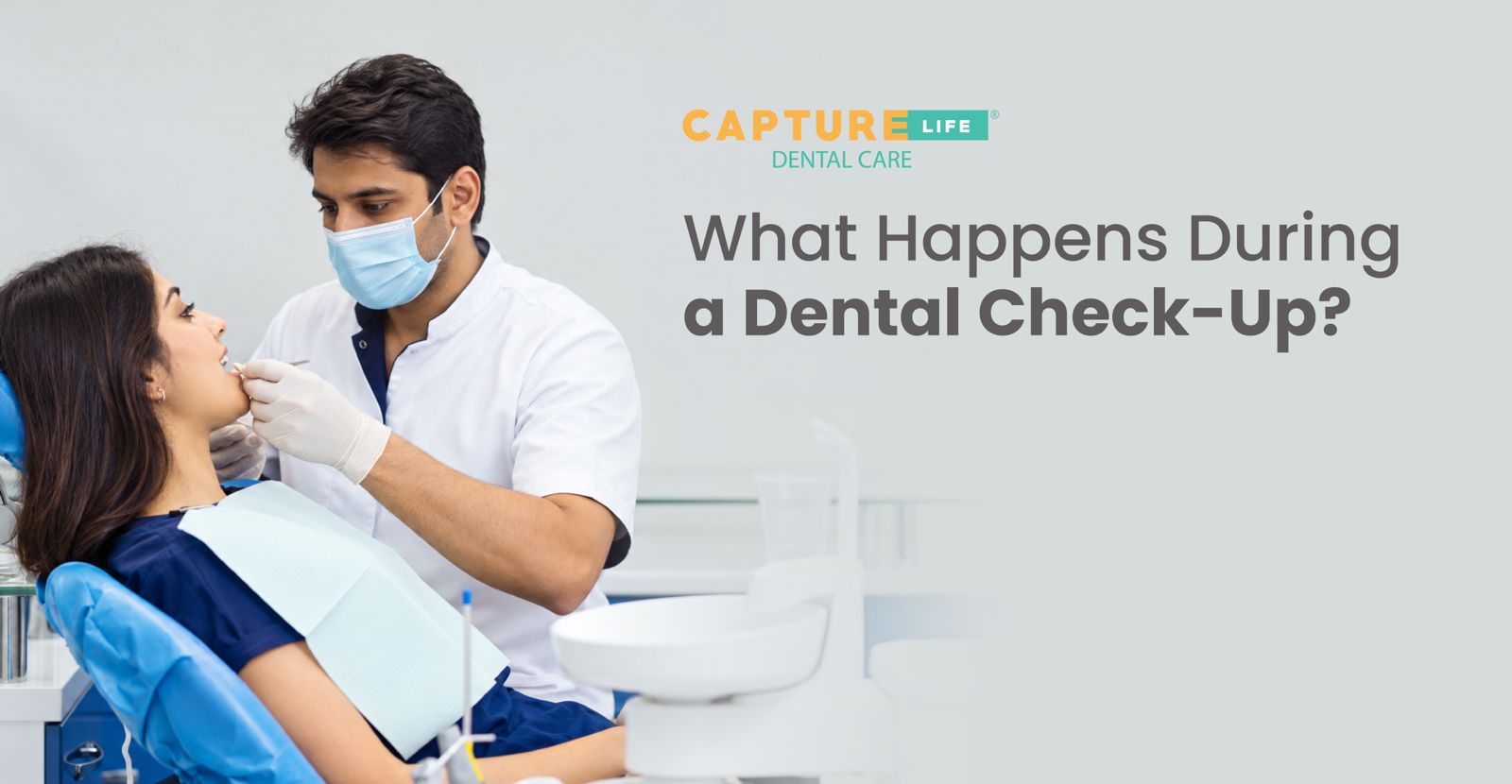
30 Sep What Happens During a Dental Check-Up?
If it has been a while since your last dental check-up, or you are visiting a dentist for the first time, it is natural to wonder what actually happens once you are in the dental chair.
Will you need an X-ray? Will your teeth be cleaned? What exactly is the dentist looking for?
The good news is that a routine dental check-up is usually quite straightforward. It is an opportunity to understand how your teeth and gums are doing, identify concerns that may not yet be causing symptoms, and know what care, if any, you may need next.
Knowing what to expect can also make that first appointment feel a little more comfortable. So, let’s walk through the process step by step.
What Happens During a Dental Check-Up?
A dental check-up is a routine assessment of your teeth, gums and overall oral health. It usually involves reviewing your medical and dental history, discussing any concerns you have, examining your teeth and gums, and recommending X-rays or further treatment when necessary.
Depending on the type of appointment and your individual needs, a professional dental cleaning may also be included.
A typical dental check-up may involve:
- Reviewing your medical and dental history
- Discussing any concerns or symptoms
- Examining your teeth
- Assessing your gum health
- Taking dental X-rays, if needed
- Professionally cleaning your teeth, if scheduled
- Checking the soft tissues in your mouth
- Discussing the findings and next steps
Not every dental check-up follows exactly the same process. Your dentist will tailor the appointment to your age, oral health, symptoms, risk factors and dental history.
Step 1: Your Medical and Dental History Is Reviewed
Before examining your teeth, your dentist or dental team will usually ask a few questions about your medical and dental history.
These may include:
- When you last visited a dentist
- Any medications you currently take
- Allergies or relevant medical conditions
- Previous dental treatments
- Recent changes in your health
- Any dental concerns you currently have
It may feel like routine paperwork, but this information matters. Certain health conditions and medications can affect your teeth and gums or influence how dental treatment is planned.
If this is your first dental visit, sharing your previous dental history also gives your dentist a clearer starting point for your care.
Step 2: You Discuss Any Dental Concerns
Have you noticed sensitivity when drinking something cold? Do your gums sometimes bleed when you brush? Does food repeatedly get stuck between the same two teeth?
This is the time to mention it.
Even something that seems minor can give your dentist useful information. Tooth sensitivity, bleeding gums, changes in your bite, persistent bad breath, discomfort while chewing or a tooth that simply “feels different” are all worth discussing.
You should also tell your dentist if you feel anxious or uncomfortable about dental visits. Knowing this allows the dental team to explain the process as they go and help make the appointment more comfortable for you.
Step 3: Your Teeth Are Examined
Next comes the dental examination itself.
Your dentist will carefully examine your teeth and existing restorations for signs of concerns such as:
- Cavities or tooth decay
- Chipped, cracked or damaged teeth
- Plaque and tartar build-up
- Worn or damaged fillings and other restorations
- Signs of tooth grinding or excessive wear
- Changes in your bite
One of the reasons routine dental check-ups are important is that dental problems do not always begin with pain. Decay, damaged restorations and other concerns can sometimes develop without obvious symptoms.
Regular examinations give your dentist an opportunity to identify these changes and determine whether they need treatment or simply need to be monitored.
Step 4: Your Gum Health Is Checked
Healthy teeth need healthy gums to support them, which is why your gums are also an important part of a routine dental check-up.
Your dentist will look for signs such as redness, swelling, bleeding or gum recession. Depending on your oral health, they may also use a periodontal probe to measure the spaces between your teeth and gums.
These checks can help identify early signs of gum disease, which may not always cause pain or other noticeable symptoms in its early stages.
Step 5: You May Need Dental X-Rays
A common question, particularly among first-time patients, is: **Will I need an X-ray?**
The answer depends on your individual needs.
Dental X-rays are not automatically required at every check-up. Your dentist may recommend them based on factors such as your symptoms, dental history, age, risk of dental disease, clinical examination and when previous X-rays were taken.
X-rays allow your dentist to see areas that cannot always be examined directly. For example, they may help identify decay between teeth or changes around the roots of your teeth and below the gumline.
If it is your first visit, X-rays may also be recommended when your dentist needs a more complete picture of your current oral health.
Step 6: You May Have a Professional Dental Cleaning
Depending on the type of appointment you have booked and the condition of your teeth and gums, your check-up may also include a professional cleaning.
Even with regular brushing and flossing, plaque can harden into tartar in areas that are difficult to clean at home. Once tartar forms, it cannot be removed with regular brushing alone.
A professional dental cleaning may involve:
- Scaling: Removing plaque and hardened tartar from the surfaces of your teeth.
- Polishing: Removing certain surface stains and smoothing the tooth surfaces.
- Flossing: Cleaning between the teeth and removing remaining debris.
Your dentist or dental professional may also point out areas that could benefit from a little more attention when brushing or flossing.
Think of this as practical guidance rather than a test of how well you have been brushing. Small changes to your daily routine can often make maintaining your teeth and gums much easier.
Step 7: Your Mouth and Soft Tissues Are Checked
A dental check-up looks beyond your teeth.
Your dentist may also examine areas such as your:
- Tongue
- Gums
- Inner cheeks
- Lips
- Roof and floor of your mouth
- Other soft tissues within the oral cavity
This allows your dentist to look for unusual changes or areas that may require further evaluation.
It is usually a quick part of the appointment, but it helps give your dentist a more complete picture of your oral health.
Step 8: Your Dentist Discusses the Findings With You
Once the examination is complete, your dentist will explain what they found.
And sometimes, the answer is simply that everything looks healthy.
If something does need attention, your dentist should help you understand:
- What the concern is
- Whether it needs treatment or monitoring
- What treatment options may be available
- What you can do at home
- When you should return for your next visit
If treatment is recommended, ask questions. Understanding what is happening and why a particular treatment has been suggested can help you make informed decisions about your dental care.
What Should You Do Before a Dental Check-Up?
There is no special preparation required for a routine dental check-up. A few simple things, however, can make your visit smoother:
- Brush and floss normally – There is no need to brush more aggressively than usual before your appointment.
- Make a note of your concern – Mention any sensitivity, pain, bleeding gums or changes you have noticed.
- Keep your medication details handy – Let your dentist know about any medicines you take, particularly if something has recently changed.
- Carry previous dental records or X-rays, if available – They may provide useful information about your dental history.
Most importantly, do not worry about making your teeth look “perfect” before your appointment. Your dentist needs to see your oral health as it is to understand how best to care for it.
How Often Should You Get a Dental Check-Up?
How often you need a dental check-up depends on your individual oral health rather than one fixed schedule for everyone.
Factors such as your risk of cavities or gum disease, previous dental problems, age, medical history and current oral health can all influence how frequently your dentist would like to see you.
Regular dental visits, along with daily brushing and cleaning between your teeth, can help identify changes early and support your oral health over time.
The Bottom Line
A dental check-up is more than a quick look at your teeth. It is an opportunity to understand your oral health, identify concerns early and know what you can do to keep your teeth and gums healthy.
And if it has been months or even years since your last appointment, that should not stop you from booking one now. What matters is understanding where your oral health stands today and what care you may need going forward.
At Capture Life Dental Care, we want you to feel informed and comfortable throughout your visit. From your initial examination to any treatment that may be recommended, our team will help you understand what we find, why it matters and what your options are.
Because knowing what to expect can make your next visit to the dentist feel a whole lot easier.
Frequently Asked Questions
What happens during a dental check-up?
A dental check-up usually includes a review of your medical and dental history, an examination of your teeth and gums, and a discussion of any concerns or treatment needs. X-rays and professional cleaning may also be included depending on your individual needs.
Do I need an X-ray at every dental check-up?
No. Dental X-rays are not required at every visit. Your dentist will decide whether X-rays are necessary based on factors such as your symptoms, oral health, risk of dental disease, previous imaging and clinical examination.
Is a dental check-up painful?
A routine dental check-up is generally not painful. You may feel some pressure during the examination or mild sensitivity during cleaning, particularly if your gums are inflamed or there is tartar build-up. Tell your dentist if you experience discomfort at any point.
How long does a dental check-up take?
The duration depends on the type of appointment and the examinations or procedures needed. A first dental visit may take longer than a routine check-up because your dentist needs to review your history and assess your current oral health.
Can a dentist tell if I don’t brush regularly?
Your dentist can see signs such as plaque and tartar build-up or gum inflammation. However, the purpose is not to judge your brushing habits. Identifying these signs helps your dentist suggest ways to improve your daily oral care.
What happens if the dentist finds a cavity?
Your dentist will explain what they have found and whether treatment is required. What happens next depends on the location, size and extent of the decay. Your dentist will discuss the appropriate treatment options with you before proceeding.