


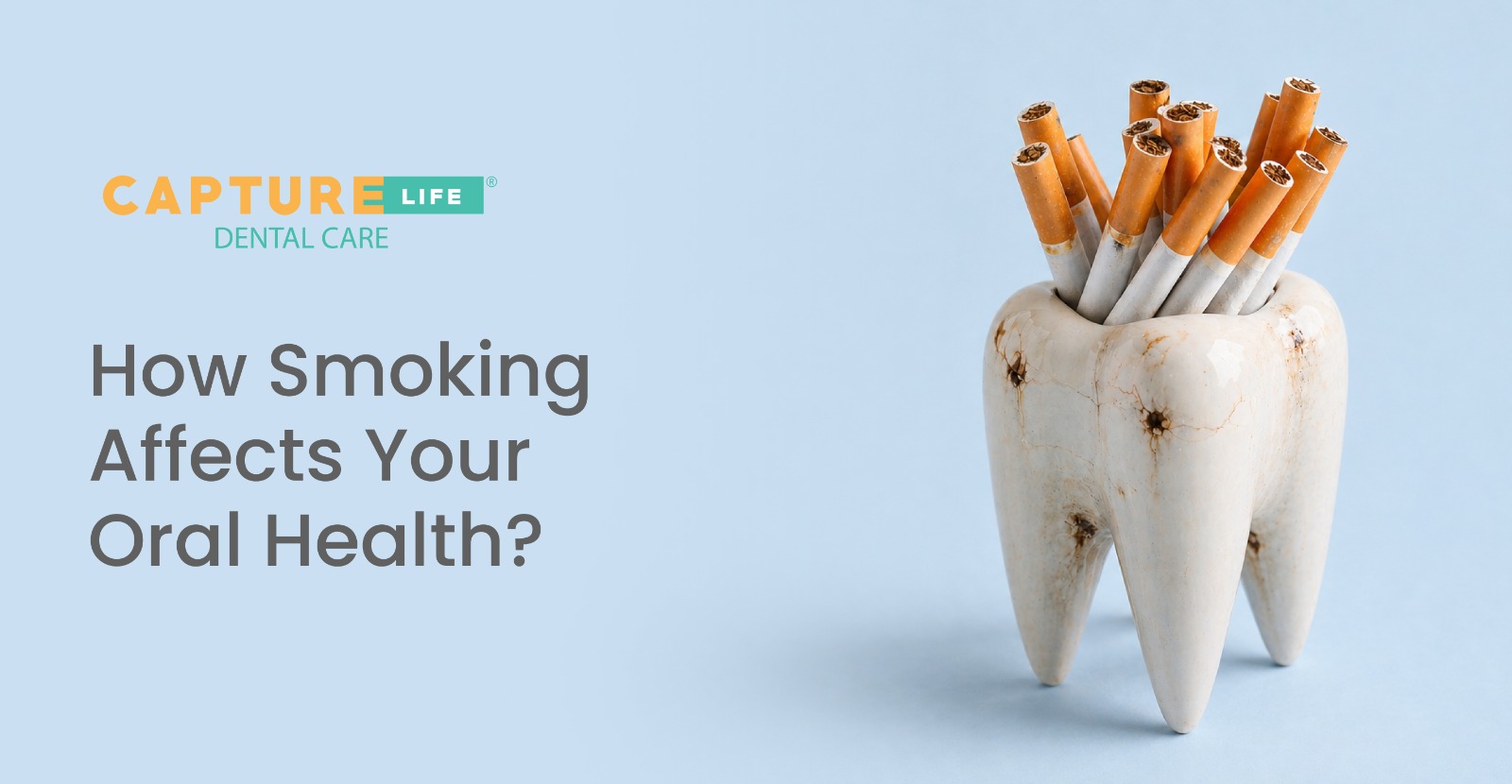
07 May How Smoking Affects Your Oral Health
Most people know smoking is not great for their health. But the conversation almost always jumps straight to the lungs, which is a little ironic, when you think about it, because every single puff begins in your mouth.
Smoke doesn’t just pass through. It’s hot, laced with chemicals, and it lingers. It coats your teeth, settles into your gums, and sticks to your tongue. And this is not a one-time thing, it repeats, day after day. Over time, your mouth doesn’t just cope with it. It starts to change in ways that aren’t always obvious until they’re already well underway.
If you smoke, or have for a while, here’s what’s actually happening inside your mouth.
Why Smoking Affects Your Mouth More Than You Would Think
Smoking changes the environment inside your mouth quite directly. It can reduce blood flow to the gums, increase harmful bacteria, slow down healing, and lower saliva production. These changes do not work in isolation, together, they make your mouth significantly more prone to infections, decay, and long-term damage.
Gum Disease That Doesn’t Always Announce Itself
One of the most common and most under-recognised effects of smoking is gum disease. Here is what makes it particularly tricky: it doesn’t always show the usual warning signs in smokers.
In non-smokers, the first clue is usually bleeding gums, when you brush or floss, there’s blood. That is the body’s way of raising a flag early. In smokers, that signal is often absent. Nicotine tightens blood vessels and reduces blood flow to the gums, so even when there’s inflammation or infection underneath, the gums may not bleed at all.
On the surface, everything can look fine. But underneath:
- Bacteria are building up along the gumline
- Gum tissue is slowly breaking down
- Small pockets are forming between the teeth and gums that collect even more bacteria
By the time you notice gums pulling back, teeth looking slightly longer, or a little looseness, the damage has already progressed. And at that stage, it is harder, though not impossible, to reverse.
Plaque and Tartar Build Up Faster
Smoking shifts the balance of bacteria in your mouth. Harmful bacteria begin to dominate, while the protective ones decline. At the same time, saliva production drops, even if your mouth does not feel noticeably dry.
Put those two things together, more harmful bacteria and less saliva to wash them away, and plaque starts forming faster than it should. Left unaddressed, plaque hardens into tartar, which can’t be removed by brushing at home. It sticks near the gumline, creates a rough surface for more bacteria to cling to, and sets off a cycle: more buildup, more irritation, more buildup.
This can happen quicker than most people expect with regular smoking.
Healing Takes Longer
This is something many people only notice after a dental procedure. In a healthy mouth, healing begins quickly, blood flow delivers oxygen and nutrients, and tissue starts repairing itself. With smoking, that process slows down considerably.
Nicotine restricts blood flow, which means less oxygen reaches the healing area. On top of that, smoke chemicals irritate the tissue directly. Even the physical act of smoking can interfere, after a tooth extraction, for example, the suction can dislodge the blood clot that forms to protect the socket. This leads to a painful condition called dry socket, which delays healing and needs additional treatment.
Dental implants are similarly affected. For an implant to integrate successfully, it needs to bond with the bone, a process that depends on good blood supply. This is why dentists strongly recommend avoiding smoking before and after any procedure.
Staining and Discolouration
One of the most visible effects of smoking is tooth staining. Nicotine and tar leave yellow or brown marks on teeth that deepen over time. These stains don’t just sit on the surface — they settle into the tiny pores in your enamel, making them harder to shift. Professional cleaning can help with surface staining, but deeper discolouration has its limits.
Smoking can also affect the tongue, which may develop a darker or coated appearance over time due to debris and bacterial buildup.
Breath and Taste You Might Not Notice Changing
Smoking affects breath in a way that goes beyond the immediate smell of smoke. The chemicals linger in your mouth and lungs, and when you add dry mouth and bacterial buildup to the mix, it leads to persistent bad breath that mints or mouthwash can only temporarily mask.
Taste changes more gradually and that is exactly why it often goes unnoticed. Smoking dulls your sense of taste over time. Food starts to feel less flavourful, more muted. Many people only realise how much they’d lost when they reduce or quit smoking and flavours seem to return, stronger than before.
Oral Cancer
One of the most serious risks associated with smoking is oral cancer and one of the reasons it can be missed early is that it often does not start with pain.
It may appear as:
- A small white or red patch inside the mouth
- A sore that does not heal within two weeks
- An area of thickened or unusual tissue
Smoking exposes your mouth to carcinogens chemicals that damage cells and, with repeated exposure, can trigger abnormal cell growth. When smoking is combined with alcohol, that risk increases further. This is something that develops slowly, often over years, which is why regular dental check-ups are so important. Early detection makes a significant difference in outcomes.
Signs Your Mouth May Be Telling You Something
Some signs are subtle, but worth paying attention to:
- Gums that seem to be pulling away from your teeth
- Persistent bad breath that does not respond to brushing
- Noticeable plaque or tartar buildup
- Yellowing or browning of teeth
- Loose teeth or unexplained discomfort
- Patches or sores inside the mouth that don’t go away
If any of these persist, it is worth getting them checked sooner rather than later.
What Actually Helps
You don’t have to overhaul everything at once. Small, consistent steps still make a real difference.
- Quitting smoking has the greatest impact, even reducing how much you smoke lowers the risk
- Drinking more water throughout the day helps combat dryness and supports saliva production
- Brushing and flossing consistently keeps plaque from hardening into tartar
- Regular dental visits allow your dentist to catch early changes you might not notice yourself
- Do not ignore persistent symptoms, a loose tooth, gum changes, or a patch that won’t heal deserves attention
The Bottom Line
Smoking affects your mouth in layers, some visible, like staining and discolouration, and some quieter, like reduced blood flow and shifts in bacterial balance. Because these changes do not always feel urgent, they’re easy to put off. But they do build over time.
The earlier you understand what is happening, the easier it is to stay ahead of it. At Capture Life Dental Care, our team is here to help you do exactly that – with honest guidance, gentle care, and no overwhelm. Book a check-up with us, and let’s take a closer look together.
FAQs
1. Does smoking always cause gum disease?
Not in every case, but it significantly raises the risk, and makes gum disease harder to detect early, since common warning signs like bleeding are often suppressed.
2. Can professional dental cleaning remove smoking stains?
Surface stains can be noticeably reduced with professional cleaning. Deeper stains that have settled into the enamel may need whitening treatment, though results can vary depending on how long and how heavily someone has smoked.
3. Why don’t smokers’ gums bleed as much?
Nicotine narrows the blood vessels in your gums, reducing blood flow. This masks one of the most common early signs of gum disease, which is part of what makes it easy to miss until it is more advanced.
4. Can oral health improve after quitting smoking?
Yes, significantly. Blood flow begins to improve relatively quickly after quitting, and with consistent oral care, many of the effects including gum health and healing ability — can improve over time.
5. How often should a smoker visit the dentist?
Ideally every six months, or as advised by your dentist. More frequent check-ups allow for earlier detection of gum changes, tissue abnormalities, or anything that needs attention.