


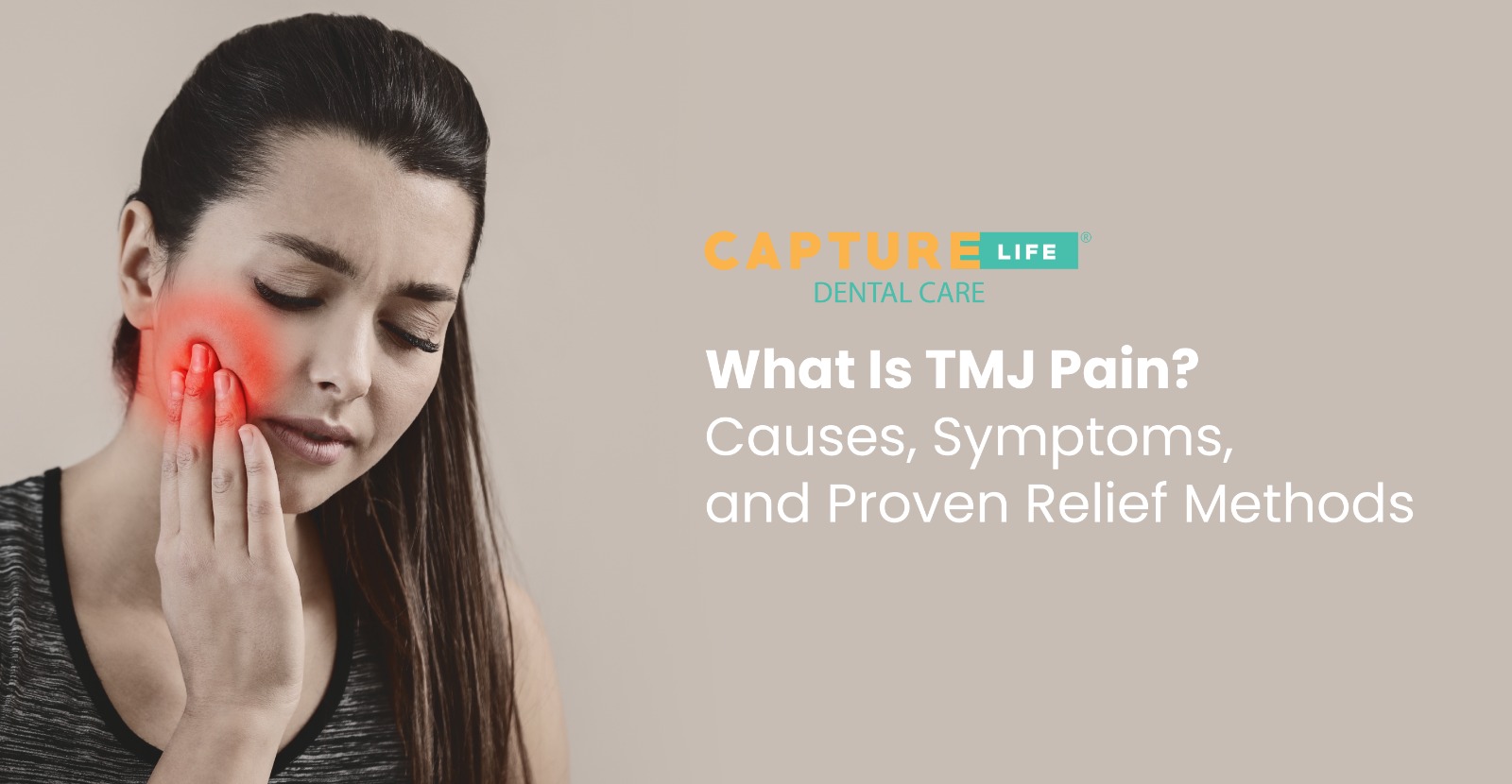
04 Apr What Is TMJ Pain? Causes, Symptoms, and Proven Relief Methods
Sometimes a simple jaw pain can feel like a small ache, clicking sounds in your mouth, difficulty in chewing or even headaches. If you have ever experienced any of these, it could be related to TMJ pain, which is a common condition that affects the jaw joint and the muscles surrounding it.
In this guide, we’ll break down what TMJ pain is, why it happens, and what you can do to find relief.
What Is TMJ?
TMJ stands for the temporomandibular joint, which connects your jawbone to your skull.
You have one joint on each side of your jaw, and they help you perform everyday actions like:
- Talking
- Chewing
- Yawning
- Opening and closing your mouth
These joints work along with muscles and ligaments to allow smooth movement. When something disrupts this system, it can lead to discomfort or pain, commonly referred to as TMJ disorder or TMD.
What Does TMJ Pain Feel Like
TMJ pain can vary from person to person. Some people experience mild discomfort, while others may find it more persistent or noticeable during daily activities.
Common sensations include:
- Pain or tenderness in the jaw
- Clicking, popping, or grinding sounds
- Difficulty opening or closing the mouth fully
- Pain while chewing
- A feeling of the jaw getting “stuck” or locked
In some cases, TMJ pain can also lead to:
- Headaches
- Earaches or a feeling of fullness in the ears
- Facial pain
Because the jaw is used so often, even mild discomfort can start to feel disruptive over time.
Common Causes of TMJ Pain
TMJ pain doesn’t usually come from just one reason. It is often caused by a combination of factors affecting the jaw joint and surrounding muscles.
Teeth Grinding or Clenching (Bruxism)
Clenching or grinding your teeth especially during sleep puts extra pressure on the jaw joint. Over time, this strain can lead to inflammation and pain in the TMJ area.
Stress and Muscle Tension
Stress can cause people to tighten their jaw muscles without realizing it. This constant tension can lead to soreness, stiffness, and discomfort around the joint.
Misaligned Bite
When the upper and lower teeth don’t align properly, it can create uneven pressure on the jaw during chewing.
Injury or Trauma
An injury to the jaw, face, or neck can affect how the TMJ functions. Even minor trauma can sometimes lead to long-term discomfort if not addressed.
Arthritis in the Joint
Like other joints in the body, the TMJ can also be affected by arthritis. This can cause inflammation, stiffness, and reduced movement in the jaw.
When Should You See a Dentist?
Occasional jaw discomfort may not always be a cause for concern. However, it’s important to seek professional advice if you notice:
- Persistent or worsening jaw pain
- Difficulty opening or closing your mouth
- Frequent clicking or locking of the jaw
- Pain that spreads to the ears or head
Early evaluation helps identify the cause and prevents the condition from becoming more severe.
Proven Relief Methods for TMJ Pain
The right treatment for TMJ pain depends on its cause and severity. In many cases, simple and non-invasive methods can provide significant relief.
Jaw Rest and Lifestyle Adjustments
Giving your jaw time to rest can reduce strain on the joint.
Helpful changes include:
- Avoiding hard or chewy foods
- Taking smaller bites
- Limiting excessive jaw movements (like wide yawning or gum chewing)
These small adjustments can ease pressure on the joint and support healing.
Warm or Cold Compress
Applying a compress to the side of your face can help reduce discomfort.
- Cold compress helps reduce inflammation
- Warm compress helps relax tight muscles
Alternating between the two may also be beneficial.
Stress Management
Since stress can contribute to jaw clenching, managing it can make a noticeable difference.
Simple practices like:
- Deep breathing
- Light stretching
- Mindfulness or relaxation techniques
can help reduce muscle tension in the jaw.
Jaw Exercises
Gentle jaw exercises recommended by a dentist can help improve movement and reduce stiffness.
These exercises are usually simple and focus on:
- Controlled opening and closing
- Strengthening surrounding muscles
- Improving joint flexibility
It’s important to follow professional guidance to avoid overexertion.
Night Guards or Splints
If teeth grinding is a major cause, a dentist may recommend a custom night guard.
This device:
- Protects teeth from grinding
- Reduces pressure on the TMJ
- Helps relax jaw muscles during sleep
It’s a common and effective solution for many patients.
Professional Dental Treatment
In some cases, additional dental care may be required, such as:
- Correcting bite alignment
- Managing underlying dental issues
- Advanced TMJ therapies if needed
A dentist can create a personalised plan based on your symptoms and lifestyle.
Bottom Line
TMJ pain can feel frustrating, especially because it affects everyday activities like eating and speaking. But with the right approach, most people find relief through simple, consistent care and professional guidance.
Paying attention to early signs, reducing strain on your jaw, and seeking timely advice can prevent the condition from worsening.
FAQs
- Can TMJ pain go away on its own?
Yes, mild TMJ discomfort can sometimes improve on its own with rest and simple lifestyle changes like avoiding hard foods and reducing jaw strain. However, if the pain persists or worsens, it’s best to consult a dentist for proper evaluation. - How long does TMJ pain usually last?
TMJ pain can last anywhere from a few days to several weeks, depending on the cause. Temporary cases linked to stress or minor strain often resolve quickly, while chronic cases may require professional treatment. - Is TMJ pain serious?
TMJ pain is usually not serious, but it can become uncomfortable and disruptive if left untreated. Persistent symptoms like jaw locking, severe pain, or difficulty chewing should be checked by a dental professional. - What foods should I avoid if I have TMJ pain?
It’s best to avoid hard, chewy, or sticky foods such as nuts, chewing gum, tough meats, and hard candies. Soft foods like soups, yogurt, and mashed vegetables are gentler on the jaw and help reduce strain. - Can stress really cause TMJ pain?
Yes, stress is a common contributor to TMJ pain. It often leads to unconscious teeth clenching or jaw tightening, which puts pressure on the joint and surrounding muscles. - Do I need a night guard for TMJ pain?
A night guard may be recommended if teeth grinding or clenching is causing your TMJ symptoms. It helps reduce pressure on the jaw joint and protects your teeth while you sleep. A dentist can determine if it’s the right solution for you.