


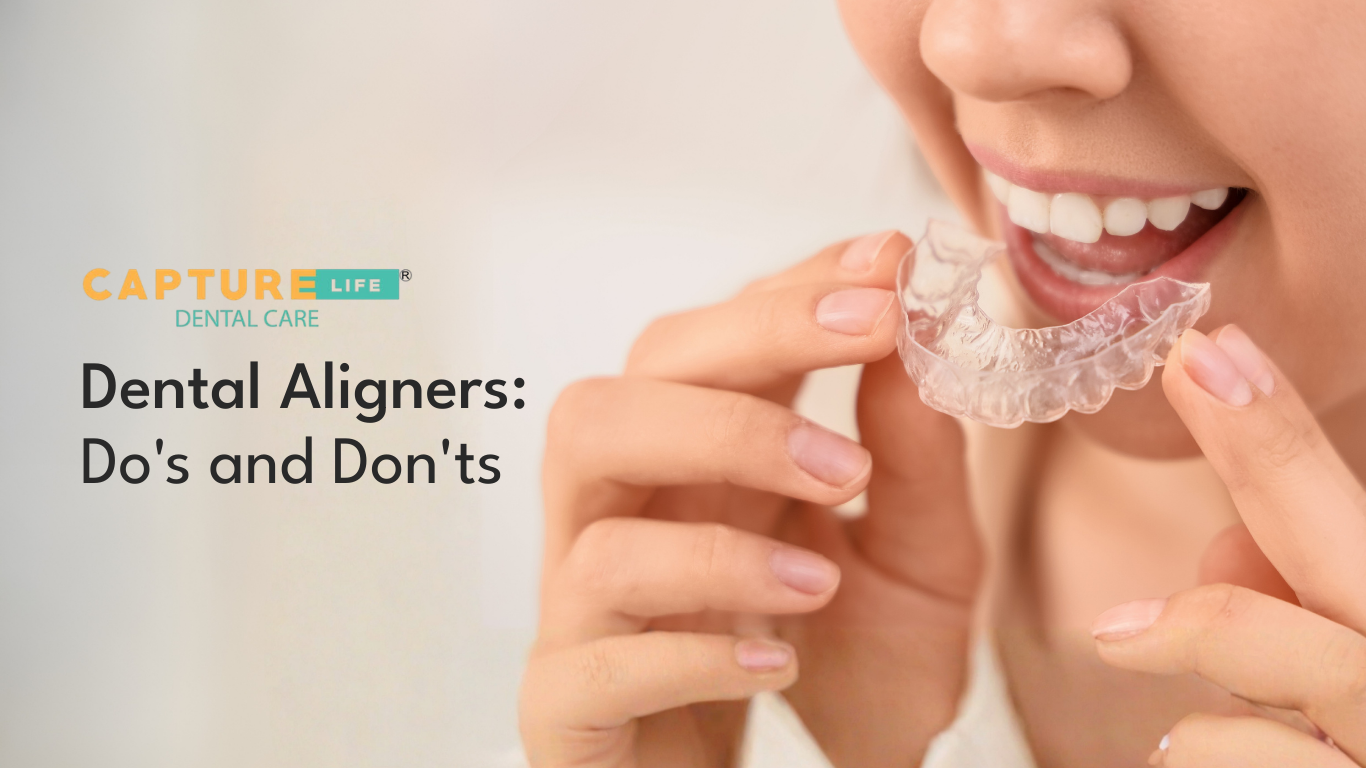
14 Mar Dental Aligners: Do’s and Don’ts
Dental aligners are one of the most popular ways to straighten teeth these days, and surely for a good reason. They have changed the way orthodontists work. These dental aligners are clear, comfortable, and easily straighten teeth without the metal brackets and wires that come with regular braces.
But while dental aligners are designed to make treatment easier, they still require proper care and discipline to deliver the results you expect.
Whether you have already decided to go with aligners or are still thinking about it, in this guide, we’ll walk you through the do’s and don’ts of dental aligners so you can keep your treatment on track and your smile healthy.
What Exactly Are Dental Aligners?
Dental aligners are custom-made, transparent and removable trays made of medical-grade thermoplastic that gently shift your teeth into the right position over time. Unlike metal braces, there are no wires or brackets involved. You simply wear a new set of trays every couple of weeks as your teeth gradually move.
Unlike traditional braces, aligners are:
- Nearly invisible
- Removable while eating
- More comfortable for most patients
- Easier to maintain
However, aligners work effectively only when they are worn correctly and consistently. That’s where following the right do’s and don’ts becomes important.
The Do’s of Dental Aligners
1. Wear Your Aligners for 20–22 Hours a Day
This is probably the most important rule. Aligners work by applying consistent, gentle pressure on your teeth. If they’re not in your mouth, they’re not working. Most dentists recommend wearing them for at least 20 to 22 hours every day.
That leaves you a couple of hours for meals, brushing, and flossing. Outside of that, they should be in. It can feel like an adjustment at first, but most people adapt within a week or two and barely notice them after that.
2. Clean Your Aligners Every Day
Aligners sit snugly over your teeth, which means they can trap bacteria and food particles if not cleaned regularly. Rinse them every time you remove them, and give them a gentle brush with a soft toothbrush and mild soap (not toothpaste, more on that shortly) at least once a day.
3. Store Them in Their Case When Not in Use
The moment aligners come out of your mouth they should go straight into the case. Loose aligners get lost, crushed, or accidentally thrown away more often than you’d think. Replacing them is both costly and sets back your treatment timeline.
4. Maintain Your Oral Hygiene Routine Diligently
Brush and floss your teeth every time before putting your aligners back in especially after meals. When you wear aligners over teeth that haven’t been cleaned, you’re essentially sealing in bacteria and food particles against your enamel. Over time, this can lead to cavities or gum issues.
5. Attend All Your Follow-Up Appointments
Your dentist needs to monitor how your teeth are responding to treatment. Regular check-ins allow them to make adjustments, confirm you’re on track, and hand over your next set of trays at the right time. Skipping appointments can disrupt the entire treatment plan.
The Don’ts of Dental Aligners
1. Don’t Eat or Drink with Aligners In
This one is non-negotiable. Eating with your aligners in can crack or warp them and chewing food while wearing them puts uneven pressure on the trays, which can interfere with the movement of your teeth. Tea, coffee, juices, and fizzy drinks all count. Always take your aligners out before eating or drinking anything other than water.
2. Don’t Rinse or Soak Aligners in Hot Water
Aligners are made from a thermoplastic material that can warp under heat. Even rinsing them under hot tap water can cause them to lose their shape and misshapen aligners won’t fit properly, making your treatment less effective. Always use cool or lukewarm water when cleaning or rinsing them.
3. Don’t Clean Them with Toothpaste
Most toothpastes are mildly abrasive by design great for your teeth, not so great for clear plastic. Toothpaste can create tiny scratches on your aligners, making them appear cloudy and less invisible over time. Stick to a clear, mild liquid soap and a soft-bristled brush instead.
4. Don’t Skip Wearing Them
Some days you just don’t feel like putting them back in after lunch. But teeth have a natural tendency to shift back toward their original position. Even a day or two of inconsistent wear can slow your progress or require you to go back to a previous tray.
5. Don’t Move to the Next Tray Before Your Dentist Says So
It might be tempting to move through the trays faster especially if the new ones feel comfortable quickly. But each tray is calibrated to move your teeth in specific increments. Moving ahead too soon can overstress your teeth or throw the entire sequence off. Always follow your dentist’s prescribed timeline.
Final Thoughts
Dental aligners are genuinely one of the most comfortable and convenient ways to achieve a straighter smile. They fit seamlessly into daily life, and when you follow the right habits, the results speak for themselves.
The key here is to keep up with consistency, cleanliness, and communication with your dentist. You’re not doing this alone, your dental team is right there to guide you through every step, answer your questions, and make sure you’re progressing comfortably.
If you’ve been curious about starting your aligner journey or have questions about whether they’re the right fit for you, we’d love to help. At CLDC, we believe every smile deserves care that feels easy, warm, and completely stress-free.
FAQs
Will aligners hurt?
Some pressure and mild soreness is completely normal, particularly when you switch to a new set of trays. It usually settles within a day or two. If the discomfort is sharp, persistent, or feels unusual, let your dentist know at your next visit.
Can I wear them while playing sports?
For light physical activity, yes. But if you’re playing contact sports like football, basketball, or martial arts, it’s best to remove your aligners and wear a protective mouthguard instead. Protect your teeth and your trays at the same time.
What if I lose or break a tray?
Contact your dentist as soon as possible. Depending on where you are in your treatment, they may ask you to go back to your previous tray, move forward, or get a replacement made. Don’t wait; prolonged gaps in treatment can cause your teeth to shift back.