


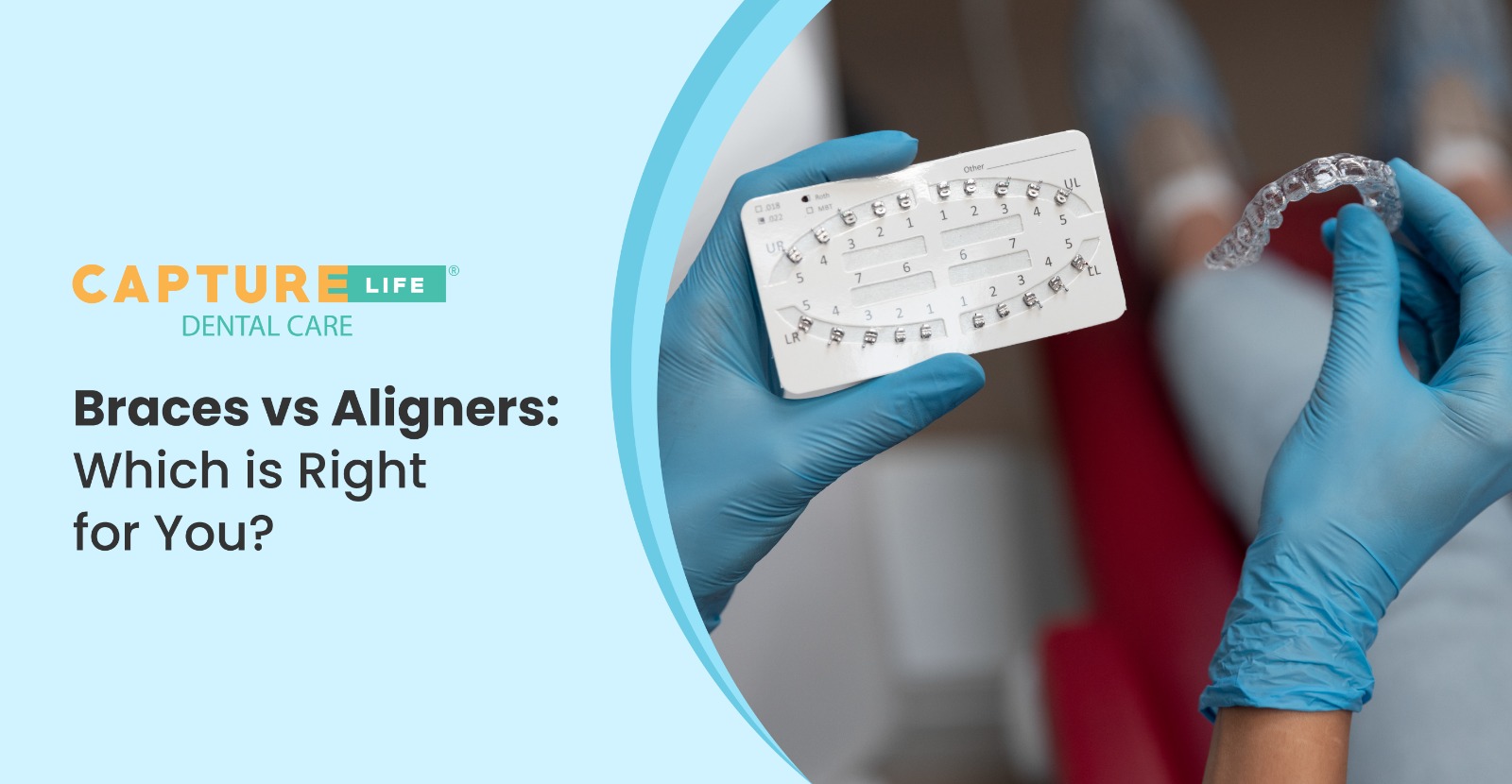
28 Feb Braces vs Aligners: Which Is the Right Choice for You?
If you’ve been thinking about straightening your teeth, chances are you’ve come across two common treatment options — traditional braces and clear aligners.
You might have noticed uneven spacing when you smile in photographs, slight crowding while brushing, or teeth that don’t seem to come together comfortably when you bite. In some cases, concerns such as overlapping teeth, gaps, or bite issues may also make it harder to maintain oral hygiene over time.
For many adults and teenagers alike, the decision to begin orthodontic treatment is not only about appearance, it’s also about improving comfort, function, and long-term dental health.
Once you decide to explore treatment, the next question often becomes:
Should you choose braces or aligners?
Both options are designed to gently move your teeth into healthier alignment over time. However, they differ in how they work, how they feel during day-to-day use, and which dental concerns they are best suited to address.
Understanding the difference between braces and aligners can help you make a more informed decision, one that supports not just how your smile looks, but also how it functions in the long term.
What Are Dental Braces?
Dental braces are a well-established orthodontic treatment that use brackets and wires to apply continuous, gentle pressure on your teeth. Over time, this pressure gradually guides teeth into improved alignment.
Because braces are fixed onto the teeth, they work consistently throughout the day without needing to be removed or adjusted by the patient. This makes them particularly effective for:
- Severe crowding
- Bite correction (overbite, underbite, crossbite)
- Rotated teeth
- Jaw alignment issues
- Complex orthodontic cases
Braces apply direct and controlled force, allowing for significant structural correction when needed.
Treatment with braces typically lasts between 18 to 24 months, depending on the complexity of your case and the extent of alignment required.
What Are Clear Aligners?
Clear aligners are a more modern orthodontic solution designed for comfort and discretion. They are custom-made, transparent trays that fit snugly over your teeth and gradually guide them into better alignment.
Instead of wires and brackets, aligners use a series of digitally planned trays that are changed every one to two weeks. Each new set gently moves your teeth closer to their final position.
Aligners are:
- Removable
- Nearly invisible
- Customized using digital scans
- Designed for a smoother wearing experience
They are typically worn for 20–22 hours a day and removed only while eating, drinking (anything other than water), or brushing.
Treatment duration with aligners may range from 12 to 18 months in mild to moderate cases, although results depend on how consistently they are worn.
Braces vs Aligners: Understanding the Differences
1. Effectiveness
Both braces and aligners are effective in improving dental alignment.
Braces are often recommended for:
- Complex orthodontic corrections
- Significant bite issues
- Rotated or severely crowded teeth
Aligners are usually suitable for:
- Mild to moderate alignment concerns
- Minor spacing or crowding
- Relapse after previous orthodontic treatment
If your treatment requires more comprehensive structural correction, braces may offer better control.
2. Treatment Duration
Treatment time depends on the complexity of your case and your body’s response to tooth movement.
On average:
- Braces: 18–24 months
- Aligners: 12–18 months (for mild to moderate cases)
However, aligners require consistent wear. Not wearing them for the recommended duration each day may delay results.
3. Comfort
Orthodontic treatment often involves some level of temporary discomfort as teeth begin to shift.
That said:
- Aligners tend to cause less irritation to the lips and cheeks due to their smooth surface
- Braces may initially feel uncomfortable because of brackets and wires
Both options involve an adjustment period, but aligners are often considered more comfortable during daily wear.
4. Oral Hygiene
Maintaining oral hygiene is essential during orthodontic treatment.
With braces:
- Food particles may get trapped between brackets
- Brushing and flossing require additional care
With aligners:
- You can remove them before brushing and flossing
- Your oral hygiene routine remains largely unchanged
Because aligners are removable, many patients find it easier to maintain gum health and prevent cavities during treatment.
5. Lifestyle and Appearance
Lifestyle preferences can also play a role in choosing between braces and aligners.
Aligners may be ideal if you:
- Prefer a discreet treatment option
- Have frequent professional or social interactions
- Want flexibility while eating
- Play contact sports
Braces may be suitable if you:
- Prefer a fixed solution
- Do not want to worry about wearing trays consistently
- Require more comprehensive orthodontic correction
Which Option Is Right for You?
There is no single “better” treatment — only the one that is better suited to your dental needs and lifestyle.
You may benefit from braces if:
- You have complex alignment issues
- Your bite requires correction
- Significant tooth rotation or jaw alignment is needed
Clear aligners may be a good option if:
- Your alignment concerns are mild to moderate
- You prefer a removable appliance
- You want a less visible treatment method
- You can wear them consistently for 20–22 hours daily
Ultimately, the most appropriate treatment can only be determined after a clinical assessment and digital scan.
Final Takeaway
Choosing between braces and aligners is an important step in your smile journey.
Both options are designed to support healthier alignment and improved function over time. The right treatment depends on your specific dental concerns and what fits comfortably into your daily routine.
At CLDC, we work with you to understand your goals and recommend an orthodontic plan that supports both appearance and long-term oral health — so your smile not only looks better, but feels better too.