


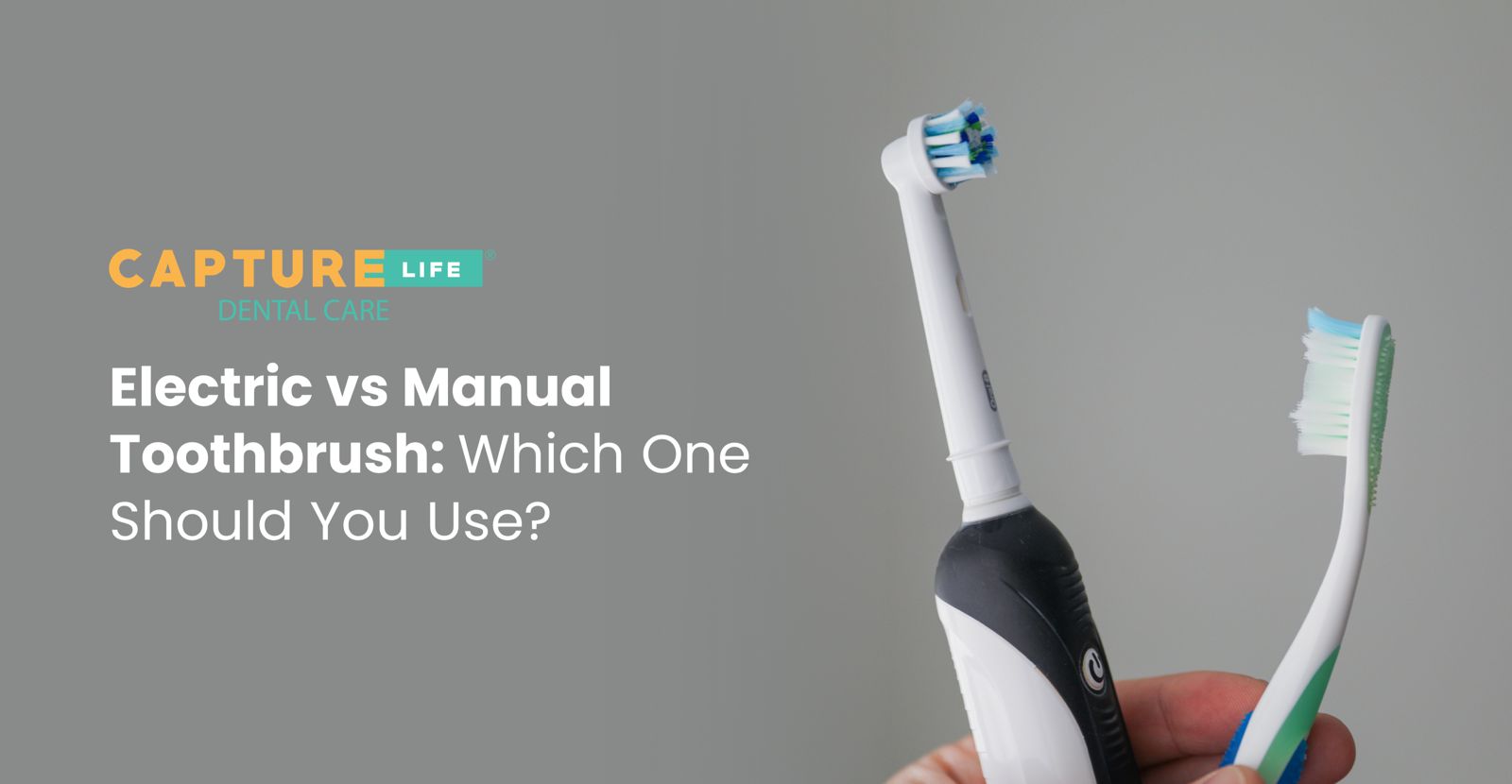
07 Nov Electric vs Manual Toothbrush: Which One Should You Use?
Walk into the toothbrush aisle today and you’ll find everything from a simple manual toothbrush to electric brushes with timers, pressure sensors and multiple cleaning modes.
Which can make you wonder: do you actually need the expensive one?
The short answer is: not necessarily.
Both electric and manual toothbrushes can help you keep your teeth clean when they’re used properly. An electric toothbrush may make brushing easier for some people, while a manual toothbrush can work perfectly well when your technique is good.
So instead of asking which toothbrush is universally better, it’s more useful to ask: which one works better for you?
Electric vs Manual Toothbrush: What’s the Difference?
The biggest difference is pretty straightforward.
With a manual toothbrush, you provide the brushing movement yourself. You control the angle, pressure and speed as you move the brush across your teeth and along your gumline.
An electric toothbrush uses a motor to move the brush head for you. Depending on the model, it may also include features such as a built-in timer, pressure sensor or different brushing modes.
Neither automatically guarantees cleaner teeth.
The way you brush, how consistently you brush and whether you’re reaching all the areas of your mouth matter just as much.
Is an Electric Toothbrush Better Than a Manual Toothbrush?
An electric toothbrush can be a great option, particularly if you find it difficult to maintain good brushing technique with a manual brush.
Some electric toothbrushes can make brushing easier by doing much of the repetitive movement for you. Many also include features that help you brush for an adequate amount of time or avoid using too much pressure.
They can be particularly useful for people who:
- Tend to brush too hard
- Struggle to brush for long enough
- Have difficulty with brushing technique
- Have limited hand or wrist mobility
- Want built-in reminders or timers
- Find an electric toothbrush easier or more motivating to use
But there’s an important catch.
More technology doesn’t automatically mean better oral hygiene.
An expensive electric toothbrush used inconsistently isn’t going to do much for your teeth. A simple manual toothbrush used correctly twice a day can be a very effective tool.
Is a Manual Toothbrush Good Enough?
Absolutely.
A manual toothbrush can clean your teeth effectively when you use it correctly and consistently.
The basics matter more than the price tag:
- Use a soft-bristled toothbrush.
- Brush twice a day with fluoride toothpaste.
- Spend enough time cleaning all tooth surfaces.
- Brush along the gumline gently.
- Don’t scrub aggressively.
- Clean between your teeth separately.
A manual toothbrush also has a few practical advantages. It’s inexpensive, easy to carry, doesn’t need charging and can be used anywhere.
So if your current manual toothbrush is working for you and you’re maintaining good oral hygiene, there’s no rule saying you need to switch to electric.
Electric vs Manual Toothbrush: Which Cleans Better?
This is probably the question you’re actually here for.
The answer isn’t as simple as “electric wins.”
Research has found that powered toothbrushes can provide some additional benefits for plaque removal and gum health compared with manual toothbrushes, particularly over longer periods. However, both can be effective when used properly.
Here’s how they compare:
| Factor | Electric Toothbrush | Manual Toothbrush |
| Cleaning | Effective with proper use | Effective with proper use |
| Technique | Can make brushing easier | Requires more manual control |
| Timer | Often included | Usually not |
| Pressure control | Available on some models | You control the pressure |
| Cost | Higher upfront cost | More affordable |
| Portability | Requires charging for many models | Easy to carry anywhere |
| Accessibility | Can be helpful for limited hand mobility | Requires more hand movement |
The important thing isn’t simply which side of the table your toothbrush falls on.
It’s whether you’re actually cleaning your teeth properly and consistently.
Which Toothbrush Is Better for Sensitive Teeth?
If you have sensitive teeth, the most important thing isn’t necessarily choosing an electric or manual toothbrush.
It’s how you brush.
Using a soft-bristled toothbrush and gentle pressure can help reduce unnecessary irritation. Brushing harder doesn’t clean your teeth better, and excessive pressure can contribute to gum irritation and wear over time.
An electric toothbrush with a pressure sensor can be helpful if you have a habit of brushing too aggressively. It can alert you when you’re applying more pressure than recommended.
But you can also learn to use a manual toothbrush gently.
If your teeth are consistently sensitive despite using a gentle brushing technique, don’t simply change your toothbrush and hope for the best. Tooth sensitivity can have several causes, including enamel wear, gum recession, cavities or other dental problems.
Which Toothbrush Is Better for Braces?
Both electric and manual toothbrushes can be used with braces.
However, an electric toothbrush may make it easier for some people to clean around brackets and wires because the powered movement can help with brushing technique.
With braces, though, the toothbrush itself is only part of the routine.
Food and plaque can collect around brackets, wires and between teeth, so you’ll usually need additional cleaning tools such as interdental brushes or other products recommended by your dentist or orthodontist.
The goal is to clean around the braces, along the gumline and between the teeth, regardless of which toothbrush you choose.
How to Choose the Right Toothbrush for You?
Instead of choosing based only on price or how many buttons the toothbrush has, think about your actual needs.
1. Consider Your Brushing Technique
If you already brush gently and thoroughly with a manual toothbrush, you may not need to change.
If you struggle with technique, an electric toothbrush may make the process easier.
2. Think About Pressure
If you tend to brush aggressively, a powered toothbrush with a pressure sensor could be useful.
Either way, the goal is gentle, controlled brushing.
3. Consider Sensitivity
If your teeth or gums are sensitive, choose a soft-bristled brush and focus on gentle technique.
If sensitivity continues, speak with your dentist rather than simply switching between different toothbrushes.
4. Think About Your Lifestyle
If you travel frequently or don’t want to worry about charging a device, a manual toothbrush is convenient.
If you like built-in timers and reminders, an electric toothbrush may suit you better.
How Often Should You Replace Your Toothbrush or Brush Head?
Both manual toothbrushes and electric toothbrush heads need to be replaced regularly.
A commonly recommended timeframe is around every three to four months, but you may need to replace yours sooner if the bristles become frayed, flattened or visibly worn.
Worn-out bristles don’t clean as effectively as they should.
If you’ve recently recovered from an illness or your toothbrush has become damaged or heavily worn, replacing it may also be sensible.
What Matters More Than Choosing an Electric or Manual Toothbrush?
Here’s the part that often gets lost in the electric-vs-manual debate.
Your toothbrush is a tool. Your habits are what make the difference.
A good oral-care routine includes:
- Brushing twice a day with fluoride toothpaste
- Using a soft-bristled toothbrush
- Brushing gently along all tooth surfaces
- Cleaning between your teeth
- Replacing your toothbrush or brush head regularly
- Keeping up with routine dental check-ups
You can spend thousands on a toothbrush, but it won’t compensate for brushing once a day or skipping the areas between your teeth.
Consistency will always matter.
The Bottom Line
So, electric vs manual toothbrush: which one should you use?
There’s no single answer that works for everyone.
An electric toothbrush can be helpful if you want built-in guidance, struggle with brushing technique, tend to use too much pressure or simply find it easier to use.
A manual toothbrush can be just as practical and effective when you’re using the right technique and brushing consistently.
In other words, you don’t need the fanciest toothbrush to have a healthy smile.
Choose the one that helps you clean your teeth properly, gently and consistently.
And if you’re unsure whether your current brushing routine is actually doing enough, that’s something your dentist can help you figure out.
Frequently Asked Questions
Is an electric toothbrush better than a manual toothbrush?
An electric toothbrush can provide some advantages, particularly for plaque removal, brushing technique and pressure control. However, a manual toothbrush can also clean your teeth effectively when used correctly and consistently.
Can a manual toothbrush clean as well as an electric toothbrush?
Yes. A manual toothbrush can be effective when you use proper brushing technique, clean all tooth surfaces and brush consistently. Powered toothbrushes may make effective brushing easier for some people.
Are electric toothbrushes better for sensitive teeth?
Not necessarily. For sensitive teeth, gentle brushing and soft bristles are more important than whether your toothbrush is electric or manual. Some electric toothbrushes have pressure sensors that can help prevent aggressive brushing.
Which toothbrush is better for braces?
Both electric and manual toothbrushes can be used with braces. An electric toothbrush may make brushing around brackets and wires easier for some people, but additional cleaning tools are often needed to reach areas a toothbrush can’t.
How often should you replace a toothbrush?
It’s generally recommended to replace your toothbrush or electric brush head approximately every three to four months, or sooner if the bristles become frayed or worn.
Do electric toothbrushes damage enamel?
An electric toothbrush doesn’t automatically damage enamel. However, excessive pressure or aggressive brushing can contribute to tooth and gum problems. If your electric toothbrush has a pressure sensor, use it to avoid pressing too hard.
Is an expensive electric toothbrush worth it?
Not necessarily. Additional features such as timers and pressure sensors can be useful, but you don’t need an expensive toothbrush to maintain good oral hygiene. Choose a toothbrush that fits your needs and that you’ll use consistently.
Should you use a soft or hard toothbrush?
A soft-bristled toothbrush is generally recommended for everyday brushing. Hard bristles and excessive pressure can irritate the gums and contribute to enamel wear over time.