


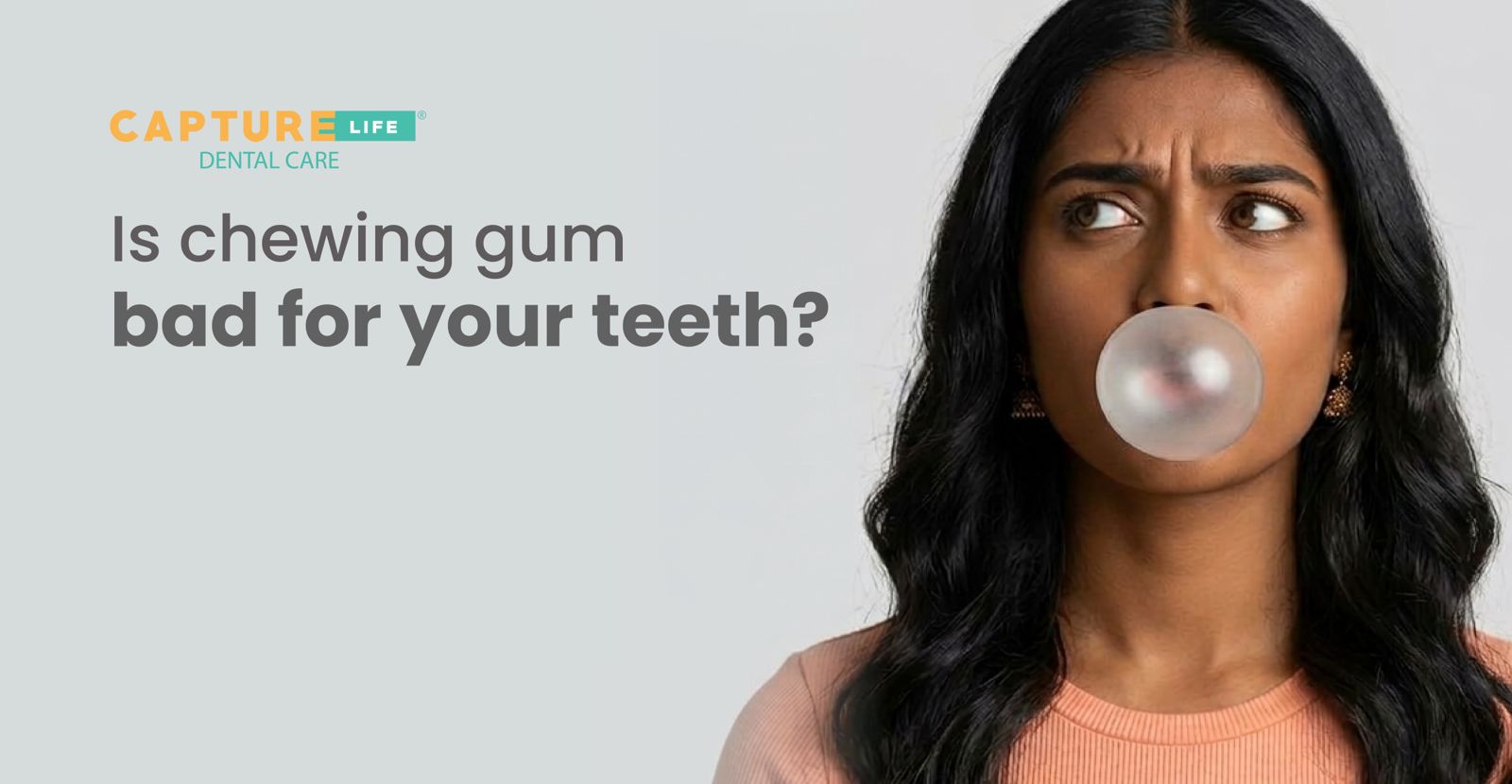
28 Oct Is Chewing Gum Good or Bad for Your Teeth?
Lunch is over, you have a meeting in ten minutes, and you reach for a piece of gum. It freshens your breath and leaves your mouth feeling cleaner. But is it actually doing anything for your teeth?
It’s a fair question, especially if you grew up hearing that chewing gum causes cavities.
The answer comes down to what’s in the gum. Sugar-free gum can support your oral health, while gum containing sugar can contribute to tooth decay. How often you chew and whether it feels comfortable matter too.
Here’s how to make a choice that works for your teeth.
Is Sugar-Free Gum Good for Your Teeth?
Yes, sugar-free gum can be a helpful addition to your daily routine. Much of its benefit comes from something your mouth already produces: saliva.
Saliva does more than keep your mouth moist. It helps wash away food particles, neutralise acids and supply minerals that support your tooth enamel. Chewing encourages your mouth to produce more of it.
This makes chewing sugar-free gum particularly useful after meals. It supports your mouth’s natural defences while you get on with your day.
Of course, a fresher mouth isn’t quite the same as clean teeth. Gum cannot brush away plaque or reach between teeth the way brushing and interdental cleaning can.
What About Xylitol Gum?
Xylitol is a sweetener used in some sugar-free gums. It gives gum its sweetness without being used by cavity-causing bacteria in the same way as regular sugar.
You may see xylitol gum promoted for its dental benefits. It can be a suitable sugar-free option, but it should not be treated as a cavity-prevention treatment on its own. The practical starting point is to choose sugar-free gum rather than assume one ingredient will do all the work.
Is Sugary Chewing Gum Bad for Your Teeth?
The main concern is the sugar.
Bacteria in dental plaque use sugar to produce acids. These acids can gradually weaken enamel, increasing the risk of cavities with repeated exposure.
Having a piece of sugary gum occasionally does not mean you will develop a cavity. Your overall eating habits, oral hygiene and frequency of sugar exposure all play a part. But if gum is something you reach for regularly, switching to a sugar-free variety is a sensible change.
Can Chewing Gum Help Prevent Cavities?
Sugar-free gum can support cavity prevention by increasing saliva flow. However, it cannot treat an existing cavity or provide all the protection your teeth need.
Your everyday routine still matters most:
- Brush twice a day with fluoride toothpaste.
- Clean between your teeth daily.
- Limit frequent sugary snacks and drinks.
- Attend dental check-ups as advised by your dentist.
You don’t need to add gum to have a good oral-care routine. If you enjoy it, think of it as a small extra that can fit around the habits you already follow.
When and How Long Should You Chew Gum?
After a meal is a useful time, whether you’re finishing lunch at work or eating while travelling.
Chewing sugar-free gum for around 20 minutes after meals can help reduce the risk of tooth decay. There’s no need to keep chewing throughout the day to get the benefit.
Comfort matters more than watching the clock. If your jaw begins to feel tired or sore, stop chewing.
Can Chewing Gum Cause Problems?
Even sugar-free gum may not suit everyone. Pay attention to how your mouth and body respond.
1. Jaw Pain or Discomfort
Long periods of chewing can tire your jaw muscles and may bring on pain or headaches. If you have a temporomandibular joint disorder, which affects the jaw joint and surrounding muscles, chewing gum can make symptoms worse.
Avoid gum if you have a diagnosed jaw disorder, and speak to your dentist if chewing causes recurring pain or difficulty moving your jaw.
2. Digestive Discomfort
Some sugar-free gums contain sugar alcohols, such as sorbitol or xylitol. In large amounts, these can cause bloating or loose stools in some people.
If you notice discomfort, reduce your intake and check the product label.
3. Braces or Recent Dental Work
If you wear braces or have a temporary filling or crown, follow your dentist’s advice about chewing gum. What is suitable will depend on your appliance or restoration.
You don’t have to guess. It’s a simple question to ask at your next appointment.
Is Sugar-Free Gum Better Than Mouthwash?
They serve different purposes.
Sugar-free gum mainly stimulates saliva. Mouthwash offers benefits depending on its ingredients; for example, a fluoride mouthwash may be recommended for additional protection against decay.
Neither replaces brushing or cleaning between your teeth, and you do not necessarily need both. Your dentist can help you decide what is useful for your particular needs.
What Should You Look for When Choosing Gum?
The choice does not need to be complicated:
- Check for “sugar-free” on the label. A minty flavour alone does not tell you whether a gum contains sugar.
- Read the ingredients. Xylitol is one sugar-free sweetener you may come across.
- Choose what feels comfortable. Stop if chewing causes soreness or discomfort.
- Keep your regular routine. A clean feeling after chewing does not replace brushing.
Small Habits That Support a Healthy Smile
So, is chewing gum good or bad for your teeth? Sugar-free gum can be a useful choice, particularly after meals. Sugary gum adds another source of sugar to your day.
There’s no need to overthink the occasional piece of gum. Choose sugar-free, keep chewing comfortable and stay consistent with your daily dental care.
At Capture Life Dental Care, we help you understand how everyday habits affect your teeth, with practical advice that fits your routine. If you have questions about cavities, jaw discomfort or choosing the right oral-care products, bring them along to your next check-up.
Frequently Asked Questions
Is chewing gum good for your teeth?
Sugar-free gum can support oral health by stimulating saliva. Gum containing sugar can contribute to tooth decay, so check the label before choosing.
What are the benefits of sugar-free gum?
Sugar-free gum encourages saliva production without adding sugar. This helps your mouth clear food particles and manage acids after eating.
Can chewing gum help with an existing cavity?
No. Gum cannot repair a cavity. If you suspect tooth decay, book a dental assessment so your dentist can advise on the care needed.
Does chewing gum clean your teeth?
It can help clear some food debris, but it does not thoroughly remove plaque. You still need to brush and clean between your teeth.
How long should you chew gum after eating?
Around 20 minutes is commonly recommended for sugar-free gum after meals. Stop sooner if your jaw feels tired or uncomfortable.
Is xylitol gum good for your teeth?
Xylitol gum can be a suitable sugar-free choice. Use it alongside your usual dental routine, without relying on it to prevent cavities on its own.
Can chewing gum damage your teeth?
Sugary gum can increase decay risk. Excessive chewing may also cause jaw discomfort, even when the gum is sugar-free. If you have braces or recent dental work, ask your dentist what is suitable.
Can I chew gum instead of brushing?
No. Gum cannot replace brushing twice a day with fluoride toothpaste and cleaning between your teeth daily.