


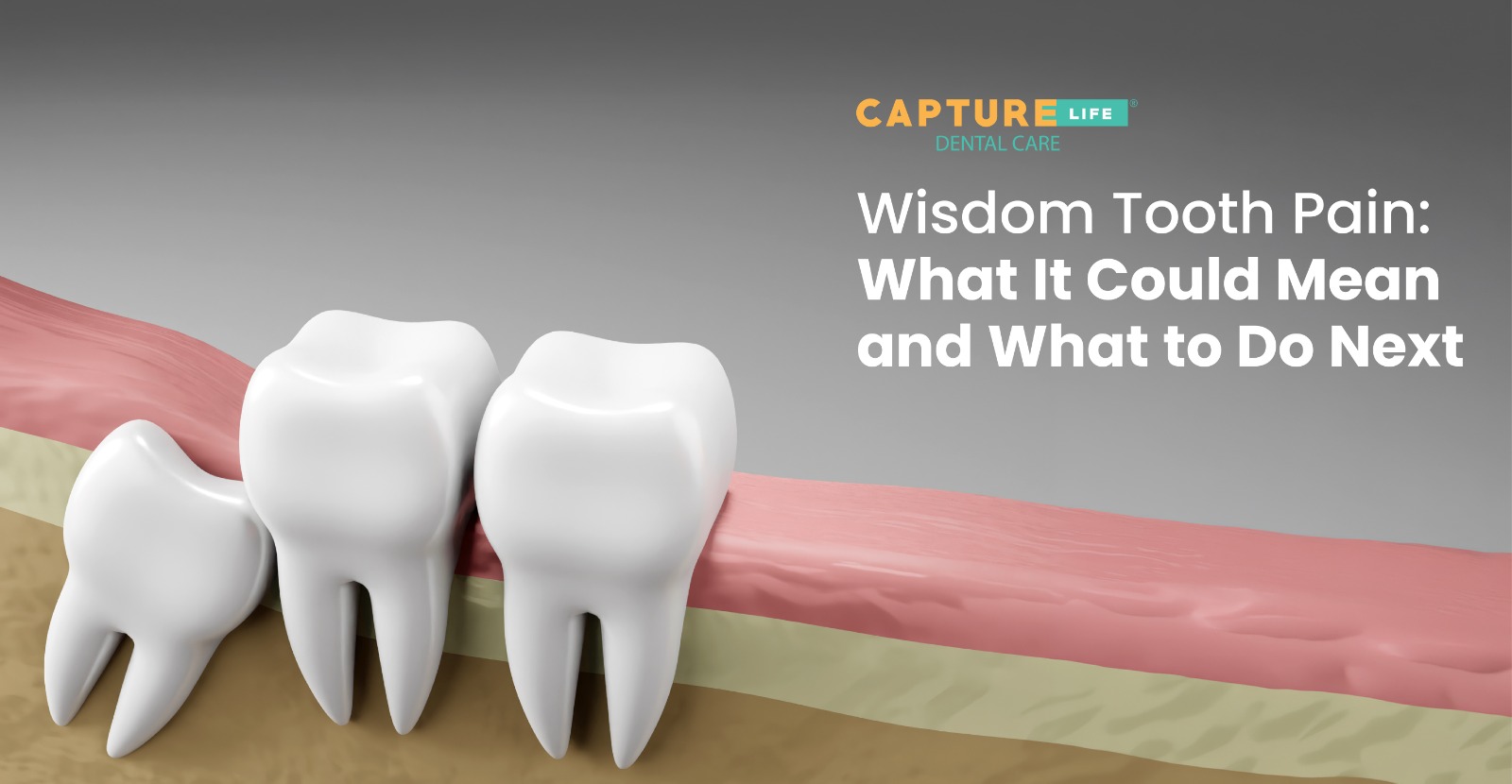
08 Sep Wisdom Tooth Pain: What It Could Mean and What to Do Next
You know that nagging ache right at the back of your mouth, the one that shows up just when you thought your smile was doing perfectly fine?
Maybe it flares up when you chew. Maybe your gum feels puffy and tender. Or maybe it’s a quiet, dull throb that lingers for a few days, fades away, and then quietly returns like it never left.
Sound familiar? Your wisdom tooth is probably behind it.
What Causes Wisdom Tooth Pain?
Wisdom teeth are the last molars to arrive, usually making their entrance in the late teens or early twenties. Since they’re the last guests to the party, there isn’t always enough room left for them to settle in comfortably.
Here’s a look at the most common reasons your wisdom tooth might be acting up:
1. The Tooth Is Erupting
If your wisdom tooth is pushing its way through the gums, you may feel soreness, pressure, or tenderness at the back of your mouth.
This discomfort tends to come and go as the tooth gradually breaks through. The gum tissue around it may also feel a little swollen or sensitive to the touch.
2. There Simply Isn’t Enough Space
Sometimes your jaw just doesn’t have the room to fit one more molar.
When that happens, the wisdom tooth may grow sideways, press against the tooth next to it, or stay partly trapped beneath the gum line. Dentists call this an impacted wisdom tooth.
Impaction is actually one of the leading reasons wisdom teeth cause pain that keeps coming back.
3. Food and Bacteria Are Getting Trapped
A wisdom tooth that’s only partly erupted can leave behind a tiny pocket between the tooth and gum.
Food particles and bacteria love to hide in this spot, and it’s genuinely hard to clean. Over time, this can lead to inflammation, and sometimes, an infection right around the wisdom tooth.
4. Gum Inflammation or Infection
Pain paired with swelling, redness, bad breath, an off taste in your mouth, or discharge near the wisdom tooth could be a sign of infection.
One condition to know about is pericoronitis, which happens when the gum around a partially erupted wisdom tooth becomes inflamed or infected.
5. Tooth Decay
Wisdom teeth sit so far back that keeping them spotless is genuinely tricky. When plaque lingers, decay can quietly follow.
In some cases, the pain you’re feeling isn’t from eruption at all, it’s coming from a cavity forming in the wisdom tooth itself.
What Does Wisdom Tooth Pain Feel Like?
Wisdom tooth pain shows up differently for everyone. The type and intensity of discomfort can offer helpful clues, though only a proper dental check-up can pinpoint the real cause.
Here’s what you might notice:
- A dull, aching sensation: usually tied to pressure or eruption
- Sharp or throbbing pain: often linked to inflammation, decay, or infection
- Tender or swollen gums: especially around a tooth that’s partly through
- Pain while chewing: happens when the tooth or nearby gum gets irritated
- Jaw stiffness or discomfort: inflammation near the back molars can make opening your mouth feel tight
- Pain that seems to travel: discomfort from the back can radiate toward your jaw, ear, or neighbouring teeth
If the pain keeps returning instead of settling for good, that’s your cue to get it checked rather than treating the symptoms again and again at home.
What Can You Do for Wisdom Tooth Pain?
If your wisdom tooth is giving you trouble, here are a few ways to feel more comfortable while you book your dental visit.
1. Keep the Area Clean
Gently brush around the wisdom tooth to clear away food and plaque. It might feel uncomfortable if the gum is sore, but keeping the area clean really does matter.
2. Rinse With Warm Salt Water
A warm salt-water rinse helps keep the area clean and can bring some temporary relief from gum irritation. Doing this twice a day can make a noticeable difference to wisdom tooth pain.
3. Choose Softer Foods
If chewing hurts, switch to softer foods for a while and try to avoid chewing directly over the sore spot.
4. Use Pain Relief If Appropriate
Over-the-counter pain medication can help take the edge off, as long as you use it as directed and it’s safe for you.
That said, pain relief only masks the symptom, it doesn’t fix what’s actually causing your wisdom tooth pain.
5. Don’t Keep Waiting If The Pain Keeps Coming Back
If the pain disappears and then returns again and again, don’t assume it’s resolved on its own.
Recurring pain often points to something that needs attention, like impaction, decay, or gum inflammation.
When Should You See a Dentist for Wisdom Tooth Pain?
Not every wisdom tooth needs to come out right away. Some erupt normally, stay healthy, and just need to be monitored over time.
Your dentist may suggest an examination if your wisdom tooth keeps causing pain, swelling, infection, decay, or makes it hard to keep the area clean.
During your visit, your dentist may examine the tooth and take a dental X-ray to understand:
- How the wisdom tooth is positioned
- Whether it’s impacted
- How much space is available
- Whether it’s affecting the tooth next to it
- Whether there are signs of decay, infection, or other complications
Based on what they find, your dentist can decide whether the tooth simply needs monitoring, some treatment, or removal.
Does Wisdom Tooth Pain Always Mean You Need an Extraction?
Not at all. A wisdom tooth doesn’t automatically need to be removed just because it has erupted or caused some passing discomfort. If the tooth is healthy, well-positioned, easy to clean, and not causing any trouble, your dentist may simply recommend keeping an eye on it.
Extraction becomes worth considering when a wisdom tooth repeatedly causes issues such as:
- Recurring infections
- Significant decay
- Impaction or poor positioning
- Damage to the neighbouring tooth
- Gum disease around the wisdom tooth
- Persistent pain or other complications
Every mouth is different, which is why an examination and the right imaging matter before any decision on removal is made.
The Bottom Line
Wisdom tooth pain can mean a lot of different things, from a tooth simply settling in, to impaction, inflammation, decay, or infection.
A little tenderness while a wisdom tooth erupts may well settle on its own. But pain that persists, keeps returning, or gets worse deserves real attention, especially when it comes with swelling, fever, trouble opening your mouth, or a lingering bad taste.
And to be clear, wisdom tooth pain doesn’t automatically mean an extraction is next. The right path forward depends on how the tooth is positioned, how healthy it is, and whether it’s affecting the teeth and gums around it.
If wisdom tooth pain has been bothering you, a visit to Capture Life Dental Care can help uncover exactly what’s going on. With a thorough examination we can walk you through whether the tooth needs treatment, monitoring, or removal, so you know exactly what comes next.
Frequently Asked Questions
How long does wisdom tooth pain last?
Mild discomfort from a wisdom tooth erupting may ease up as the tooth settles in. However, pain that lingers, keeps returning, or worsens should be checked by a dentist, as it could point to impaction, inflammation, decay, or infection.
How do I know if my wisdom tooth is infected?
Pain along with swelling, redness, pus or discharge, a lingering bad taste, bad breath, fever, or difficulty opening your mouth can all signal an infection. These symptoms are worth having a dentist look at.
Can wisdom tooth pain go away on its own?
Sometimes, yes, especially when it’s just temporary gum irritation from eruption. But if the pain keeps coming back or shows up alongside other symptoms, the underlying issue may still need proper treatment.
What is the fastest way to relieve wisdom tooth pain?
Keeping the area clean, rinsing with warm salt water, sticking to softer foods, and using appropriate over-the-counter pain relief can offer temporary comfort. These steps won’t fix deeper issues like an impacted or infected wisdom tooth, though.
At what age do wisdom teeth usually come in?
Most people see their wisdom teeth erupt during the late teens or early twenties, though timing varies from person to person. Some may see theirs come in later, while others may have wisdom teeth that stay impacted and never fully emerge.