


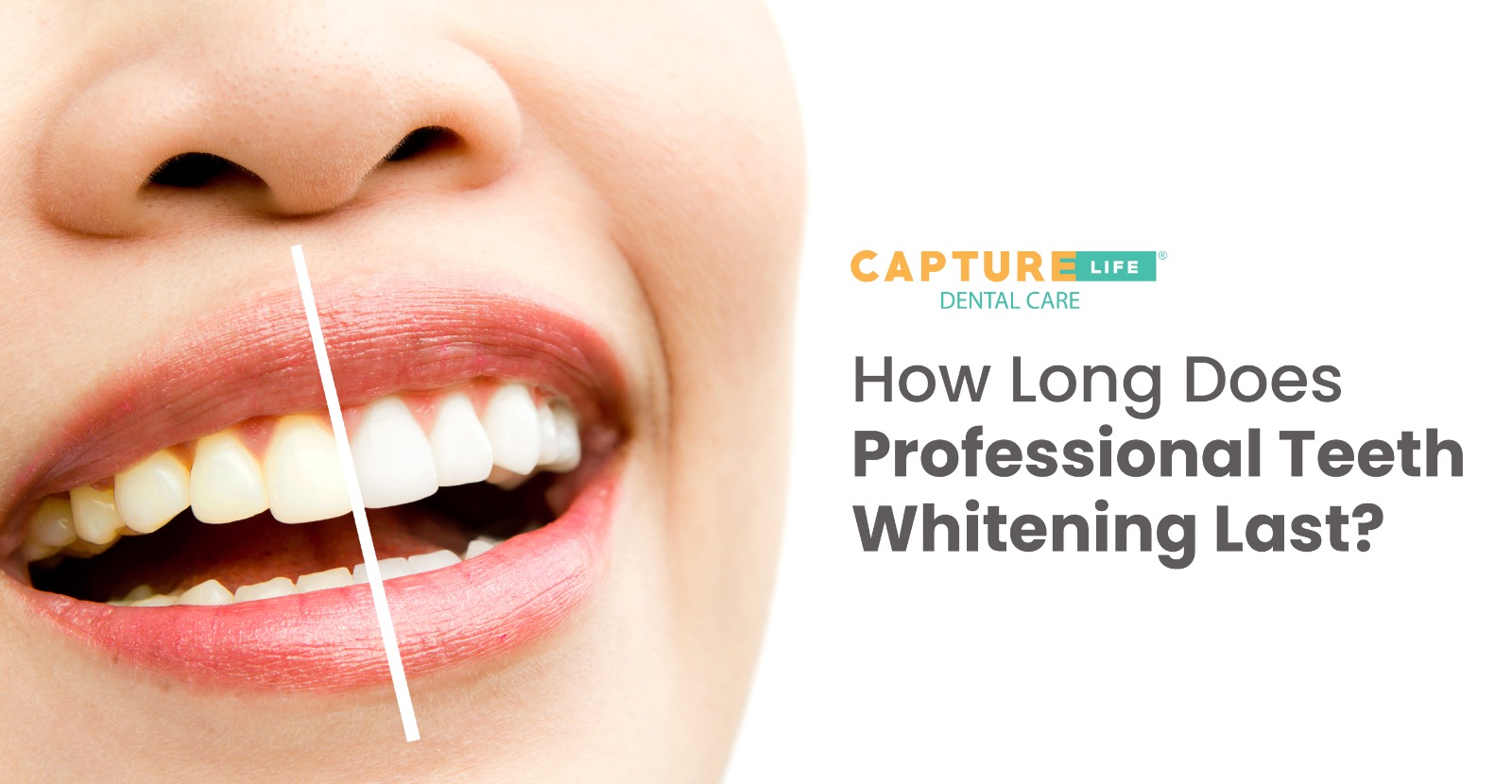
31 Aug How Long Does Professional Teeth Whitening Last?
White teeth are often seen as a sign of good health. It makes many feel more confident, and that’s exactly why professional teeth whitening has become such a popular treatment at dental clinics.
But here’s the important question: how long does professional teeth whitening last?
How Long Does Professional Teeth Whitening Last?
Professional teeth whitening can last several months to a few years, depending on the treatment used and your daily habits. Coffee, tea, tobacco, red wine, and other richly pigmented foods and drinks can gradually bring stains creeping back in.
Here’s the reassuring part: professional whitening isn’t an all-or-nothing deal. Depending on the treatment you go for, your dentist may simply suggest the occasional touch-up to refresh your results, rather than a full treatment all over again.
Types of Teeth Whitening and How Long They Last
Not all whitening treatments are created equal. The real difference lies in the concentration of the whitening ingredients, how deep they can work into the stains, and how quickly you actually see a change.
1. In-Office Professional Teeth Whitening
If you want a dramatic difference and you want it fast, this is usually the go-to option. A dentist applies a professional-strength whitening gel, typically containing hydrogen peroxide or carbamide peroxide, while carefully protecting your gums and surrounding tissue along the way.
Because the gel is more concentrated and a professional is guiding the entire process, many people walk out with visibly whiter teeth after a single appointment. Exactly how much whiter depends on your starting shade, the kind of stains you’re dealing with, and the specific whitening system your dentist uses.
How long does it last?
Results typically last around 1–2 years, although there’s no strict expiry date stamped on your smile. Your day-to-day habits play a huge role here. If coffee, tea, or cigarettes are a regular part of your routine, don’t be surprised if your teeth start looking a little duller sooner than someone who steers clear of those staining culprits.
2. Dentist-Supervised Take-Home Whitening Kits
Not thrilled about spending an entire appointment in the dental chair? Your dentist can give you custom-fitted whitening trays along with a professional-strength gel to use at home, following their exact instructions.
Because the trays are moulded to your teeth, the gel stays exactly where it should, minimising unnecessary contact with your gums. This route usually takes a bit longer than in-office whitening since the gel used is milder and applied over several sessions instead of one intensive treatment.
How long does it last?
Anywhere from several months to a couple of years or more, depending on your habits and how consistently you maintain your results. One real perk of this option is that your dentist can tell you exactly when it’s time for a touch-up, instead of you guessing and potentially overdoing it on your own.
3. Over-the-Counter Whitening Strips
Whitening strips are thin, flexible strips coated in a whitening gel that sits directly against your teeth. Most rely on peroxide to lift stains, though usually at a much lower concentration than what you’d get in a dental clinic.
They’re a handy option if you need a quick confidence boost before an event, but be prepared, they typically need to be used repeatedly over days or weeks, rather than delivering an instant transformation like in-office treatments do.
How long do whitening strips last?
The effect usually lasts a few months, though this varies quite a bit depending on the brand, how often you use them, and your own staining habits. Strips aren’t meant to be a one-and-done fix either. Many are designed as a full course of treatment with occasional maintenance, so stick to the manufacturer’s directions. Using them more than recommended won’t necessarily whiten your teeth faster, it just raises your risk of sensitivity and gum irritation.
4. Whitening Toothpaste
Whitening toothpaste plays an entirely different game compared to bleaching treatments and strips.
Most whitening toothpastes rely on mild abrasives to buff away surface stains left behind by coffee, tea, and smoking. Some also contain a touch of peroxide to help with whitening, but since they’re mainly tackling surface-level stains, don’t expect the same dramatic colour change you’d get from professional treatments.
How long does whitening toothpaste last?
There isn’t really a “duration” to speak of here, it’s less a treatment and more an ongoing habit. Used consistently, it helps keep new surface stains from building up and supports a cleaner, brighter-looking smile over time.
Think of whitening toothpaste as your smile’s daily maintenance crew, not a stand-in for professional whitening. If your discolouration runs deeper than the surface, toothpaste alone probably won’t move the needle much.
How to Make Teeth Whitening Last Longer?
Once you’ve invested in whitening, your everyday habits can make a noticeable difference in how long the results stay visible.
- Limit staining foods and drinks: Coffee, tea, soda’s, red wine, dark berries, and strongly coloured sauces can contribute to new stains.
- Rinse after staining drinks: If you can’t brush after coffee or tea, rinsing your mouth with water can help reduce prolonged contact with staining compounds.
- Don’t smoke or use tobacco: Tobacco can cause significant tooth staining and can quickly work against your whitening results.
- Brush and floss consistently: Good oral hygiene helps prevent plaque and surface stains from building up.
- Keep up with professional cleanings: Dental cleanings can remove plaque and certain surface stains that regular brushing may leave behind.
- Don’t over-whiten: More frequent whitening isn’t automatically better. Repeated or excessive use can increase the risk of sensitivity and gum irritation.
Are There Any Side Effects to Teeth Whitening?
Teeth whitening is generally considered safe when done the right way, but a few temporary side effects are worth knowing about.
Tooth Sensitivity
Some people notice increased sensitivity to hot, cold, or sweet foods and drinks after whitening. This is usually short-lived and tends to settle down after treatment.
Gum Irritation
Whitening gel can irritate your gums if it comes into contact with them, especially when a product doesn’t fit properly or is applied incorrectly. Dentist-supervised treatments help minimise this risk through careful, controlled application.
If you already deal with cavities, gum issues, exposed tooth roots, or noticeable sensitivity, it’s worth chatting with your dentist before diving into whitening. Sorting out any underlying dental issues first can make the whole process smoother and far more comfortable.
The Bottom Line
So, how long does professional teeth whitening last? There’s no single, one-size-fits-all answer. Depending on the treatment you choose and your own habits, your results can last anywhere from several months to a couple of years.
Your diet, tobacco use, oral hygiene routine, and the specific whitening treatment you opt for all play a part in how long your smile stays bright. Professional whitening was never about achieving permanently white teeth, it’s about getting to a brighter shade safely and knowing exactly how to keep it that way.
If you’ve been thinking about whitening your smile, a consultation at Capture Life Dental Care can help you figure out which treatment actually suits your teeth, what results you can realistically expect, and how to make them last as long as possible.
Frequently Asked Questions
How long does professional teeth whitening last?
Professional teeth whitening results can last anywhere from several months to around two years, depending on the treatment method, diet, oral hygiene, and lifestyle habits. Regular maintenance can help extend the results.
How often can I get my teeth professionally whitened?
There isn’t a universal schedule for whitening treatments. The appropriate frequency depends on your teeth, the whitening method used, and how quickly your teeth develop new stains. Your dentist can recommend a suitable maintenance schedule.
Does teeth whitening damage your teeth?
When performed correctly and used as directed, teeth whitening is generally considered safe. Temporary sensitivity or gum irritation can occur, particularly if whitening products are overused or improperly applied.
Can I drink coffee after teeth whitening?
Coffee can contribute to new staining, particularly soon after whitening. Your dentist may recommend limiting strongly colored foods and drinks for a period after treatment and rinsing with water when you do consume them.
Can yellow teeth become white again?
Many types of surface and some deeper stains can respond to professional whitening, but results depend on the cause and type of discoloration. A dentist can assess your teeth and determine whether whitening is likely to work for you.
Is professional teeth whitening better than whitening toothpaste?
They serve different purposes. Professional whitening uses stronger, dentist-supervised treatment to lighten the natural color of teeth, while whitening toothpaste is primarily designed to help remove surface stains. The right option depends on your goals and the condition of your teeth.