


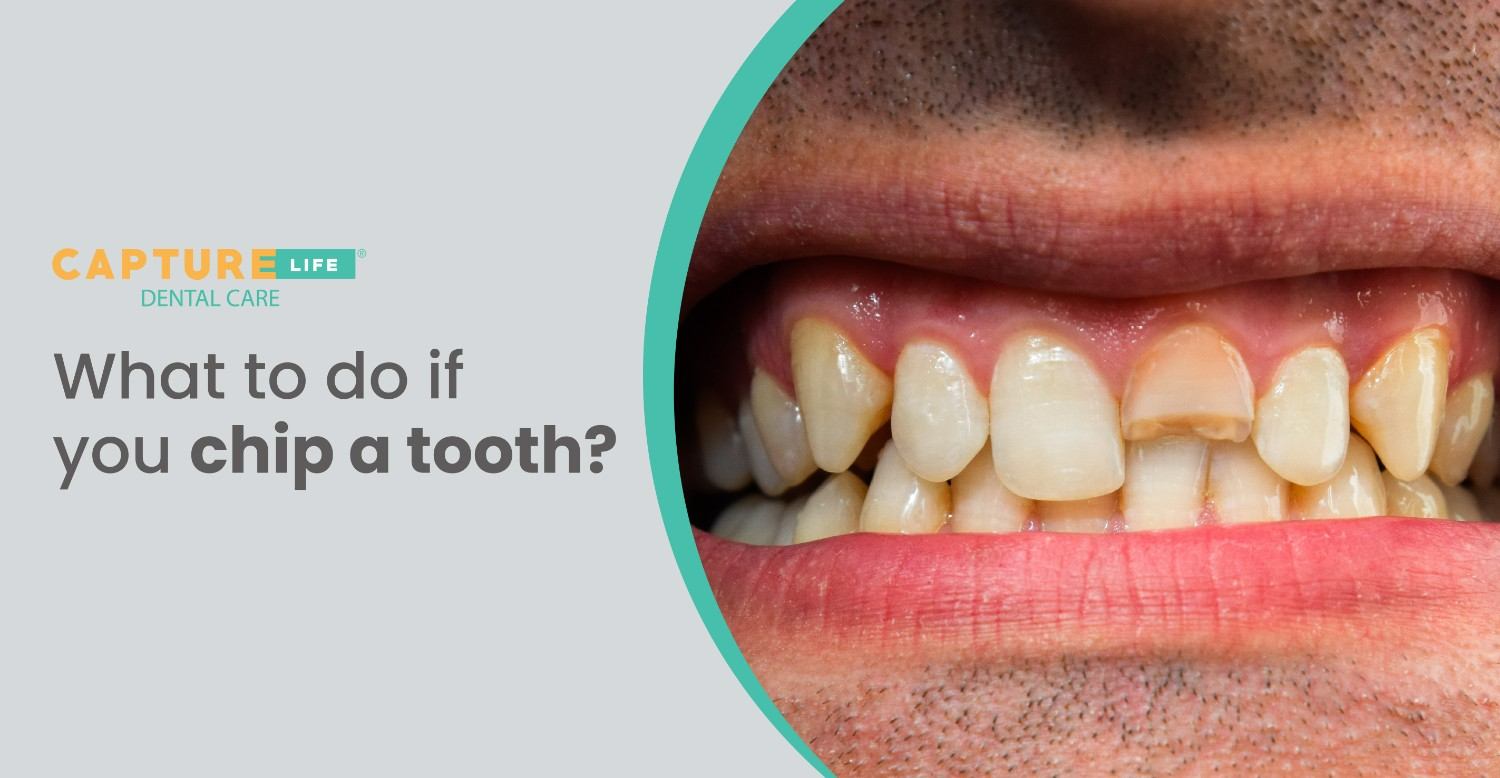
24 Aug What to Do If You Chip a Tooth?
A chipped tooth can happen without much warning. It can happen when you bite into something harder than expected, take a bad fall, or when a tooth that’s already weakened gives way during ordinary chewing. Whatever the cause, the damage you can see on the surface doesn’t always tell the whole story.
Sometimes a chip stays limited to the enamel, the tough outer layer of the tooth. Other times, it goes deeper and exposes the dentin or even the pulp underneath, which can bring on sensitivity, pain, or the risk of further damage if it’s left alone.
Knowing what to do in the first few minutes can make a real difference in protecting the tooth, so here’s a practical guide to walk you through it.
What Should You Do Immediately After Chipping a Tooth?
If you chip a tooth, your first priority is to protect it, along with the gums and soft tissue around it. Here’s what helps:
- Rinse your mouth gently: Use clean, lukewarm water to clear away any debris around the damaged tooth.
- Find the broken fragment: If you can find it, put it in milk, saliva, or saline solution, that prevents it from drying out. You dentists may be able to use it during the treatment.
- Control any bleeding: Apply gentle pressure with clean gauze to .
- Use a cold compress: Hold it against the outside of your cheek if you notice swelling.
- Avoid chewing on the affected tooth: Use the other side of your mouth until you have visited your dentist.
- Avoid very hot or cold foods: Very hot or very cold foods can set off sensitivity in the chipped tooth, so it’s best to avoid them.
Is a Chipped Tooth a Dental Emergency?
Not every chipped tooth needs emergency treatment. A tiny enamel chip without pain may not qualify as urgent, but it should still be examined by a dentist.
Seek dental care if you notice any of the following:
- Severe or persistent tooth pain
- Bleeding that doesn’t stop
- Significant swelling
- Severe sensitivity to hot or cold
- A large portion of the tooth has broken away
- Red or pink tissue visible inside the tooth
- The tooth feels loose or displaced
- Difficulty biting or closing your teeth normally
These signs may point to deeper damage. A significant injury can affect the dentin or pulp, and the fracture may extend further than what’s visible on the surface.
Why Does a Tooth Chip?
Tooth enamel is extremely strong, but it is not indestructible. However, it can still fracture under sufficient force.
Some of the most common causes of a chipped tooth are:
- Biting hard foods or objects
- Falls and accidents
- Sports injuries
- Teeth grinding or clenching
- Large or weakened dental fillings
- Tooth decay
- Age-related wear
Sometimes, the chip results from an already weakened tooth. Treating the underlying cause can help prevent further damage.
How Serious Is Your Chipped Tooth?
The seriousness depends on how deeply the tooth is damaged.
- Minor Enamel Chip: A small chip may affect only the enamel. You might notice a rough or sharp edge. There may be little or no pain.
- Dentin Exposure: A deeper chip can expose the dentin. This is the layer beneath your enamel. The tooth may become sensitive to temperature or sweets. You may also experience discomfort while chewing.
- Pulp Exposure: A severe fracture may reach the dental pulp. The pulp contains nerves and blood vessels. This can cause significant pain and sensitivity. It also increases the risk of infection. The tooth may require more extensive treatment.
You cannot reliably judge the depth yourself. A dentist needs to examine the tooth properly.
How Does a Dentist Treat a Chipped Tooth?
Chipped tooth treatment depends on several factors. These include the size and location of the chip. The health of the remaining tooth also matters.
1. Smoothing and Polishing
Very small enamel chips may need minimal treatment. The dentist can smooth and polish the rough edge. This improves comfort and prevents irritation.
2. Dental Bonding
Dental bonding is commonly used for smaller chips. A tooth-coloured composite resin is applied to the tooth. It is shaped to restore the missing portion. Bonding can be particularly useful for a chipped front tooth.
3. Dental Veneers
A veneer may be considered for certain front-tooth chips. It is a thin restoration placed over the tooth’s surface. It can restore its shape and appearance.
4. Dental Crown
A larger fracture may weaken the remaining tooth. In these cases, a dental crown may be recommended. The crown covers and protects the damaged tooth.
5. Root Canal Treatment
A deep fracture can expose or damage the pulp. Root canal treatment may then be necessary. The affected pulp is removed. The inside of the tooth is then cleaned and sealed.
The tooth may subsequently need a crown for protection.
The Bottom Line
A chipped tooth is not always a dental emergency. But it should not simply be ignored.
The visible chip may involve only the enamel. It may also be part of a deeper fracture.
Early assessment can establish the extent of the damage. Your dentist can then recommend the appropriate treatment.
If you have chipped a tooth, schedule a dental examination at CLDC. The sooner it is assessed, the sooner you can understand the damage and the treatment it requires.
Frequently Asked Questions
1. Can a chipped tooth heal on its own?
No. Tooth enamel cannot regenerate once it has chipped. Even a painless chip should be assessed. Your dentist can determine whether treatment is needed.
2. What happens if I leave a chipped tooth untreated?
Some minor chips may remain stable. Others can weaken the tooth or fracture further. Deeper damage may also expose the pulp. This can increase the risk of infection.
3. Why does my chipped tooth hurt when I eat or drink?
A deeper chip may expose the dentin or pulp. This can make the tooth sensitive to hot, cold or sweet foods. Pressure while chewing may also cause discomfort.
4. How quickly should I see a dentist for a chipped tooth?
Arrange a dental examination as soon as you can. Seek emergency care for severe pain or swelling. Significant bleeding, pulp exposure or extensive damage also needs urgent attention.