


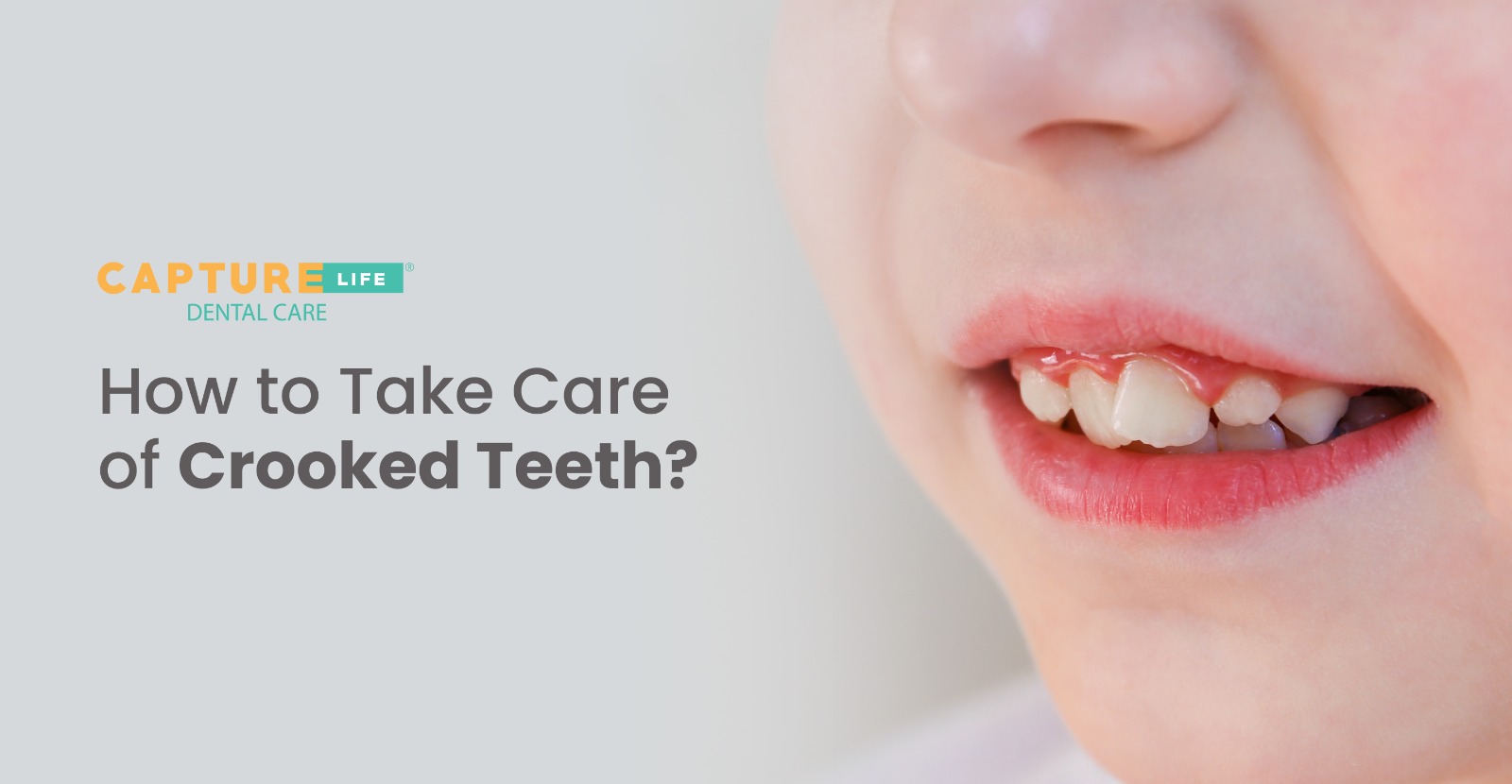
24 Jul How To Take Care Of Crooked Teeth: Causes, Risks & Treatment Options
Crooked teeth don’t always need to be “fixed” right away, but they do need to be taken care of. Figuring out how to take care of them starts with understanding what your teeth actually need, and that is different for everyone. Crooked teeth are common, and with proper care and treatment, they can stay healthy and functional.
So before deciding what to do about it, it helps to understand where it actually comes from.
What Causes Crooked Teeth?
Misalignment usually comes down to one of a few consistent factors:
- Genetics: Jaw size and tooth spacing are largely inherited. If a parent has crowded or crooked teeth, there is a higher likelihood that these traits may be passed on to their child.
- Childhood habits: Thumb sucking, prolonged pacifier use, or chronic mouth breathing can gradually change how teeth erupt.
- Losing baby teeth too early or too late: When a baby tooth falls out ahead of schedule, neighboring teeth drift into the gap, leaving less room for the permanent tooth.
- Jaw size and overcrowding: A smaller jaw means there is less room for teeth to align properly. When teeth compete for space, they may erupt at an angle instead of growing in straight.
In most cases, crooked teeth develop due to a combination of genetic and developmental influences. Identifying the underlying cause can provide valuable insight into why crowding may progress over time rather than stabilize.
Do Crooked Teeth Need Treatment?
For many people, crooked teeth are simply a natural variation in dental alignment. But it’s worth paying closer attention if any of this sounds familiar:
- Cleaning feels harder than it should: Overlapping teeth create tight corners where food and plaque collect which a regular toothbrush can often miss.
- Persistent Cavities: Hard-to-reach areas entail that plaque sits longer, which raises your risk of tooth decay in those specific spots.
- Frequent Jaw Discomfort: Misalignment can affect how your upper and lower teeth meet, which sometimes shows up as jaw discomfort.
Even if you have not experienced these symptoms, it is advisable to visit your dentist regularly. Routine examinations can help monitor the health and alignment of your teeth, while any specific concerns can be assessed and addressed early.
How to Care for Your Crooked Teeth Every Day
If you’re not treating your misalignment right now or you’re just not sure you want to, the goal is simple: don’t let the extra hiding spots turn into extra problems.
- Floss daily, no excuses: Crooked teeth have more hiding spots for food and plaque, and flossing gets into the gaps your brush simply can’t reach.
- Try an interdental brush: These tiny brushes are made exactly for tight spaces between teeth. These are a game changer if you haven’t tried one.
- Use a water flosser: It flushes out particles stuck in tricky corners, especially useful when regular flossing feels difficult.
- Brush at an angle: Angling your brush toward the gumline helps clean areas where misaligned teeth tend to overlap.
- Use an Alcohol Free Mouthwash: Alcohol free mouthwash works as a solid backup. It catches whatever’s still lingering in the corners.
- Don’t skip the professional clean. Crooked teeth are harder to self-monitor, so visiting your dentist every six months is genuinely worth it, they’ll catch what you might miss.
How to Care for Your Crooked Teeth Every Day?
If crooked teeth are affecting your bite, your breathing, or your ability to keep up with cleaning, maintenance alone won’t be enough. Here’s what an actual treatment plan typically looks like:
- Digital diagnostic planning: If your dentist determines that treatment is necessary, the process begins with a thorough assessment and personalized treatment plan. Before any tooth is treated, your dentist uses 3D intraoral scans and X-rays to assess root health and map out a precise, safe path for each tooth.
- Creating space, if needed: In cases of heavy crowding, the dentist first makes room either through selective extractions or interproximal reduction (a minor, controlled reshaping of the enamel between teeth).
- Active movement and bite correction: Using braces or clear aligners, teeth are first straightened, then the bite is adjusted so your upper and lower teeth meet properly.
- Retention: Once teeth are in position, retainers (fixed or removable) hold them there. Bone takes months to stabilize around new tooth positions, so skipping this step is how relapse happens. (change this we can keep retainers forever)
How Long Does Treatment Take?
Treatment timelines vary from person to person. The duration depends on the amount of tooth treatment required and the complexity of the case. After evaluating your teeth and treatment goals, your dentist can provide a more accurate estimate.
- Clear Aligners: Typically 6–18 months for mild to moderate alignment concerns, depending on how consistently the aligners are worn.
- Traditional Braces: Usually 12–24 months for moderate to complex cases that require more extensive tooth movement.
- Retainers (Post-Treatment): Worn after braces or aligners to help maintain the new tooth position. Your dentist will recommend how long and how often they should be worn anywhere from a few months to even a couple of years, depending on the severity of the treatment.
The Bottom Line
Crooked teeth aren’t something that needs fixing overnight, and they’re not a flaw to correct just for appearances. What matters is whether they’re affecting your ability to clean, chew, or breathe comfortably. For some people, that means a slightly more deliberate care routine. For others, it means braces or aligners to correct a bite that’s genuinely causing problems.
Your smile is already good. Keeping it healthy doesn’t have to cost a fortune, it just needs a little extra attention, and knowing when that attention should turn into an actual treatment plan.
The only way to know which one applies to you is a proper assessment, not guesswork.
If you’re unsure where you stand, book a consultation at Capture Life Dental Care. We’ll assess your bite, walk you through your actual options, and help you figure out if anything needs to change.
Frequently Asked Questions
1.Do I need braces with crooked teeth?
Not at all. Braces are a treatment option, but they’re not the only one. If your crooked teeth aren’t causing any functional issues, maintaining them well with a solid oral hygiene routine is completely valid.
2.Are crooked teeth harder to clean?
Yes. Misaligned teeth have more tight corners and overlapping areas where food and plaque can hide, which is why being extra intentional with flossing and brushing matters more.
3.Can Crooked Teeth Get Worse Over Time?
Yes. Teeth can shift slightly as you age, particularly when there is limited space in the jaw to accommodate them. The size and shape of your jaw can influence how likely your teeth are to become more crowded over time. Consistent oral hygiene and regular dental visits can help monitor these changes and address any concerns early.
4.Is it expensive to maintain crooked teeth?
Not really. Most of what you need is a good toothbrush, floss, interdental brushes, and an alcohol-free mouthwash. The bigger investment is just consistency.
5.Should I actually consider braces or aligners?
If your teeth are causing difficulty chewing or speaking, jaw pain, or recurring dental issues, it’s worth having a conversation with your dentist. Braces and aligners may also be an option if you’d like to improve dental alignment and the overall appearance of your smile. Otherwise, consistent maintenance and regular check-ups can go a long way.