


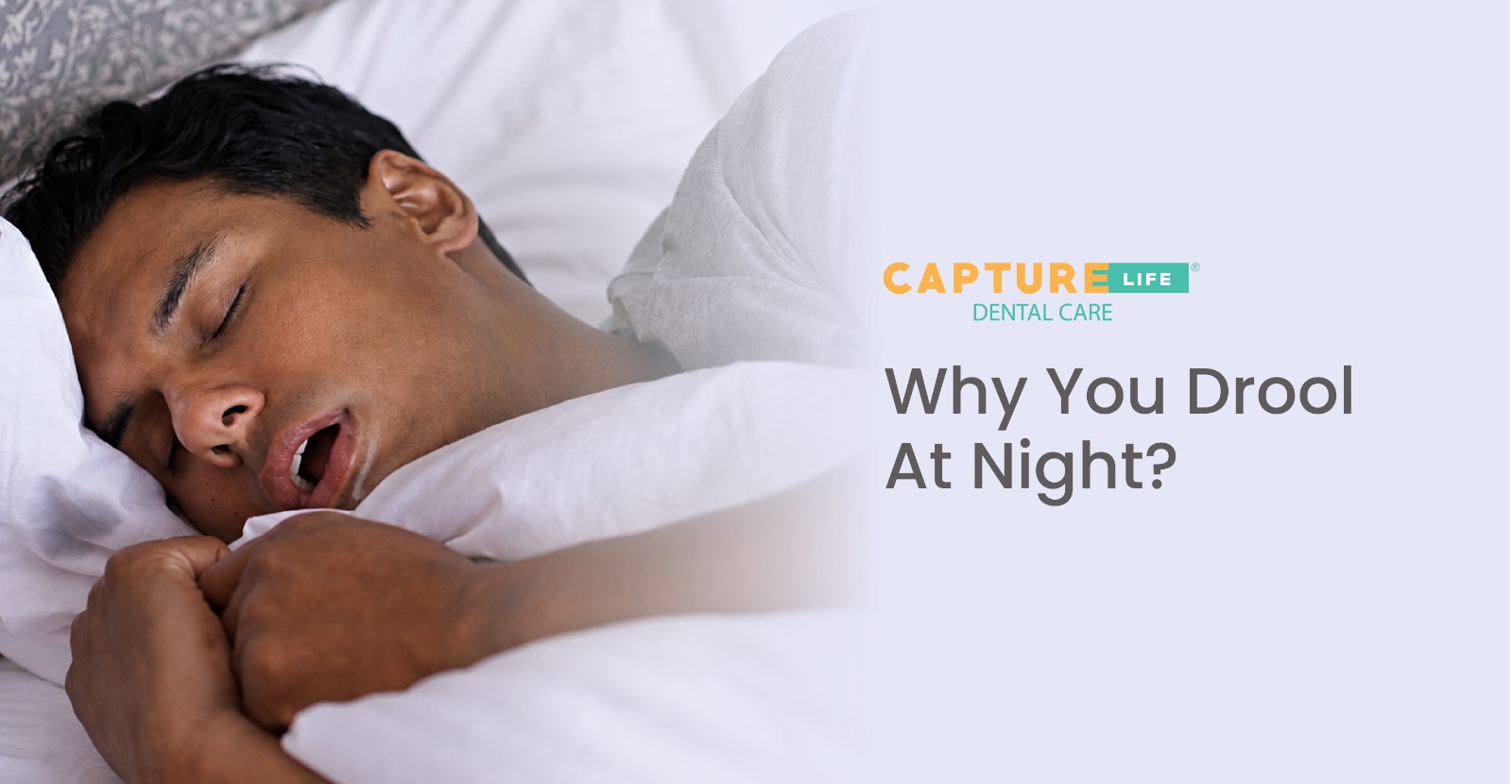
15 Jul Why Do You Drool at Night?
Your body does a lot of strange things while you sleep, drooling is just one example. And here’s the thing: it does not suddenly appear in adulthood. It actually goes back to when your first tooth erupted and your salivary glands went into overdrive as a natural response to gum irritation. Completely involuntary, completely normal.
So if drooling has followed you into adulthood, it was never really something you could control to begin with. It’s common, it’s normal, and honestly, It might just mean you were sleeping really well. Here’s the full breakdown.
What Causes Nighttime Drooling?
Overnight drooling rarely has a single cause. It is usually triggered by a mix of sleeping position, daily habits, and physical factors you might not immediately connect to your mouth.
- Hormonal changes during pregnancy: Increased saliva production (a condition called ptyalism gravidarum), combined with nausea and acid reflux, creates the perfect storm for excessive nighttime drooling.
- Facial trauma or jaw injury: A hard hit to the face from sports, a fall, or an accident can damage facial nerves or shift jaw alignment, making it harder for your mouth to stay closed while you sleep.
- Certain medications: Antipsychotics, antibiotics, and epilepsy drugs can increase salivary gland activity as a side effect, leading to excess saliva production during sleep.
- Mouth breathing: Whether caused by nasal congestion, habit, or jaw position, breathing through your mouth disrupts swallowing. Saliva pools at the front of the mouth, and gravity does the rest.
- Nasal blockage: Allergies, a deviated septum, or chronic congestion force mouth breathing, which in turn triggers drooling.
- Muscle relaxation during deep sleep: Relaxed muscles slow the automatic swallowing reflex you don’t even notice while awake, so saliva accumulates faster than it’s cleared.
How to Fix Nighttime Drooling?
Most causes of nighttime drooling are easy to manage with a few small changes to your habits and routine.
- Switch to back sleeping: Gravity works in your favor, so saliva pools toward the back of your throat instead of escaping out the sides of your mouth.
- Elevate your head slightly: A slightly raised pillow angle can help prevent saliva from escaping during sleep.
- Clear nasal congestion: Allergies, colds, or sinus infections lead to mouth breathing and more drooling. Try a humidifier, saline nasal spray, or vapor rub before bed.
- Stay hydrated before bed: A well-hydrated body produces thinner, more manageable saliva, dehydration thickens saliva and worsens drooling. Staying hydrated also keeps your oral mucosa moist and protected.
- Practice nose breathing: Training yourself to breathe through your nose during the day gradually makes nasal breathing your default at night, too.
- Try myofunctional therapy: These targeted exercises retrain your tongue, lips, and jaw muscles to maintain proper resting posture, directly addressing the muscle control behind drooling.
What Are the Effects of Drooling?
While occasional drooling is harmless, it happening often can start to show up in less obvious ways.
- Skin and lip irritation: Constant contact with saliva keeps the skin wet; once that moisture evaporates, it leaves the area around your mouth and chin dry, irritated, and chapped.
- Increased cavity risk: Drooling means saliva is leaving your mouth instead of protecting it. This raises acidity levels, reduces enamel protection, and lets bacteria multiply faster, increasing cavity risk over time.
- Worsened morning breath: This isn’t your typical morning breath. The dry mouth caused by drooling leads to a stronger, more persistent odor.
Bottom Line
Drooling during sleep is a natural, involuntary process and, in most cases, nothing to be concerned about. With a few simple adjustments, it can be easily managed.
That said, if you have ongoing concerns about your oral health, our team at Capture Life Dental Care is here to help. Whether it’s nighttime drooling, a persistent toothache, or any other dental concern, you don’t have to navigate it alone.
Frequently Asked Questions
1)Is drooling in your sleep a sign of a health problem?
For most people, nighttime drooling is completely harmless and simply the result of sleep position or nasal congestion. However, if it starts suddenly or becomes excessive, it can sometimes point to an underlying issue, such as sleep apnea, chronic sinus infections, or acid reflux.
2)Why do I drool more on some nights than others?
Drooling fluctuates based on your daily habits and environment. You’re likely to drool more on nights when you sleep on your side or stomach, when a cold or allergies force mouth breathing, or after taking certain medications. Alcohol or spicy foods close to bedtime can also trigger extra saliva production.
3)Is drooling more common in children than adults?
Yes. Drooling is much more common in infants and young children because their neurological and muscular control over swallowing is still developing, and teething increases saliva production. Most children naturally outgrow excessive drooling by around age two or three.
4)Can drooling damage your teeth?
In most cases, yes. Drooling means saliva is escaping your mouth instead of staying in it to protect your teeth. When your mouth dries out overnight, you lose the natural defense that washes away food particles and neutralizes harmful acids. This dry environment lets bacteria multiply faster, increasing your risk of tooth decay and cavities over time.