


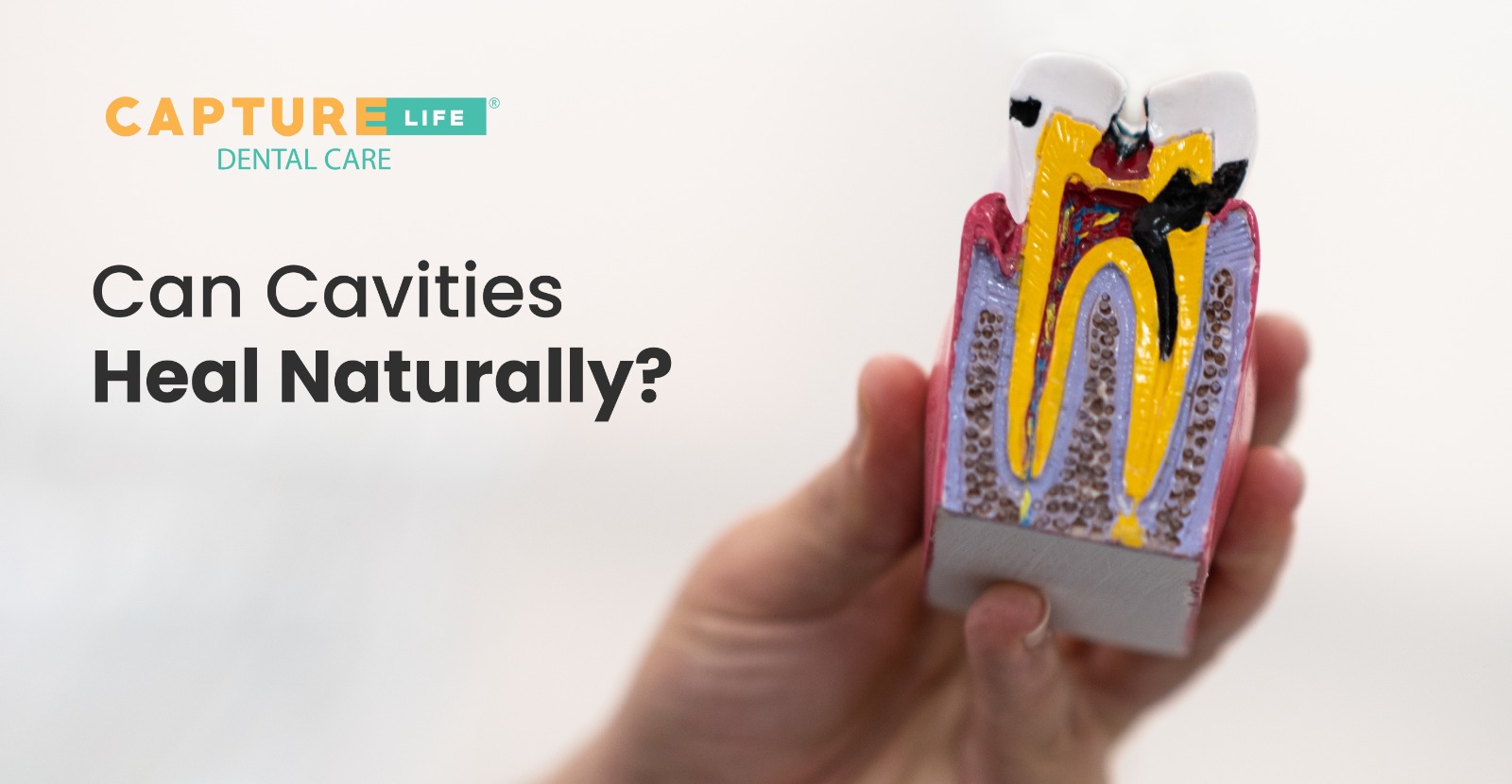
27 May Can Cavities Heal Naturally?
You may have come across this idea earlier that cavities can heal on their own with the right diet or oral care routine. And honestly? There’s a grain of truth to it. But like most things in dentistry, the full picture is a little more nuanced.
Whether a cavity can reverse itself depends entirely on how far it has progressed. Understanding that difference can help you act at the right time and potentially save a tooth from needing more extensive treatment.
What Is a Cavity, Really?
A cavity is damage to the hard outer surface of your tooth — your enamel — caused by acid. That acid comes from bacteria in your mouth that feed on sugars and release waste products that gradually break down the tooth structure.
It doesn’t happen overnight. It’s a slow process, and it has distinct stages. That’s the key to understanding whether natural healing is possible.
The Stages of Tooth Decay
Stage 1: Demineralisation
This is the very beginning. Acid attacks draw out minerals from the enamel, weakening it. You might notice a white or chalky spot on the tooth — that’s the first visible sign.
At this stage, no hole has formed yet. The surface is intact. And this is the only stage where reversal is genuinely possible.
Stage 2: Enamel Decay
The enamel begins to break down further. A cavity starts to form. Once the surface of the enamel has broken, it cannot repair itself. This is the point where professional treatment becomes necessary.
Stage 3 and Beyond: Dentine and Deeper
Once decay reaches the dentine, the softer layer beneath the enamel, it progresses faster. You may start to notice sensitivity or discomfort. Left untreated, it can eventually reach the pulp of the tooth, which is where things become more complex and painful.
So Can a Cavity Actually Heal?
The honest answer: early-stage decay can be reversed. A fully formed cavity cannot.
When a cavity is still in the demineralisation stage, before a hole has formed, your body has a natural mechanism to fight back. It’s called remineralisation, and it happens through saliva. Saliva carries minerals like calcium and phosphate that can re-deposit into weakened enamel and strengthen it.
Fluoride, whether from toothpaste or professional treatments, supports this process significantly by making enamel more resistant to future acid attacks.
But once the enamel surface has broken down and a hole has formed, there is no natural process that can rebuild it. The tooth cannot grow back what’s been lost. That’s when a filling becomes necessary.
What Actually Helps With Remineralisation?
If decay is caught very early, the following habits genuinely support your enamel’s ability to recover:
- Brushing with fluoride toothpaste twice a day: Fluoride is one of the most effective tools for strengthening weakened enamel
- Cutting back on sugar and acidic foods: Less acid means fewer mineral losses
- Drinking water regularly: Especially fluoridated water, which supports remineralisation throughout the day
- Eating a balanced diet: Foods rich in calcium and phosphorus (like dairy, leafy greens, and nuts) support mineral replenishment
- Not snacking constantly: Every time you eat, acid levels in your mouth rise; giving your mouth recovery time between meals matters
These steps won’t reverse a cavity that’s already formed, but they can stop early-stage decay from progressing and prevent new cavities from developing.
Why Waiting Is Rarely a Good Idea
Here’s the thing about cavities, they don’t stay small. Once decay has broken through the enamel, it moves into the dentine, which is softer and less resistant. Progression speeds up. What starts as a small cavity that needs a simple filling can, over time, become decay that reaches the nerve and requires a root canal.
Early treatment is almost always simpler, quicker, and more comfortable than treatment delayed. A small filling at the right time can save a significant amount of time, discomfort, and cost down the line.
The Bottom Line
Early-stage decay can be reversed but only before a cavity fully forms. Once a hole develops, it needs professional treatment. No home remedy, oil pulling routine, or special diet can rebuild lost tooth structure at that point.
The most powerful thing you can do is catch decay early. That means regular check-ups, consistent oral care at home, and not ignoring the small signs your mouth gives you.
At Capture Life Dental Care, we look for early signs of decay at every check-up so that if something is developing, we can address it before it becomes a bigger concern. Book a visit with us, and let’s stay ahead of it together
FAQs
1. Can a cavity go away on its own?
Only at the very earliest stage, called demineralisation, before a hole has formed. Once the enamel surface breaks down, it cannot heal naturally and needs dental treatment.
2. Does fluoride toothpaste really help with cavities?
Yes. Fluoride supports remineralisation, the process by which weakened enamel can recover minerals and strengthen. It also makes enamel more resistant to future acid attacks.
3. How quickly does a cavity progress?
It varies depending on diet, oral hygiene, and individual factors. Some cavities can take months or years to develop; others progress faster. This is another reason regular check-ups matter so your dentist can monitor any changes over time.
4. Can children’s teeth get cavities that heal naturally?
The same principle applies, very early decay in baby teeth can potentially be slowed or reversed with fluoride and dietary changes. But formed cavities still need treatment, even in milk teeth, as untreated decay can affect the developing permanent teeth underneath.
5. What happens if I leave a cavity untreated?
Decay will continue to progress through the enamel into the dentine and eventually toward the nerve of the tooth. This can lead to significant pain, infection, and more complex treatment like a root canal or extraction.
6. Is oil pulling or natural remedies effective against cavities?
There is no reliable clinical evidence that oil pulling or other home remedies can reverse or treat cavities. Fluoride toothpaste, a balanced diet, and professional dental care remain the most effective approach.