


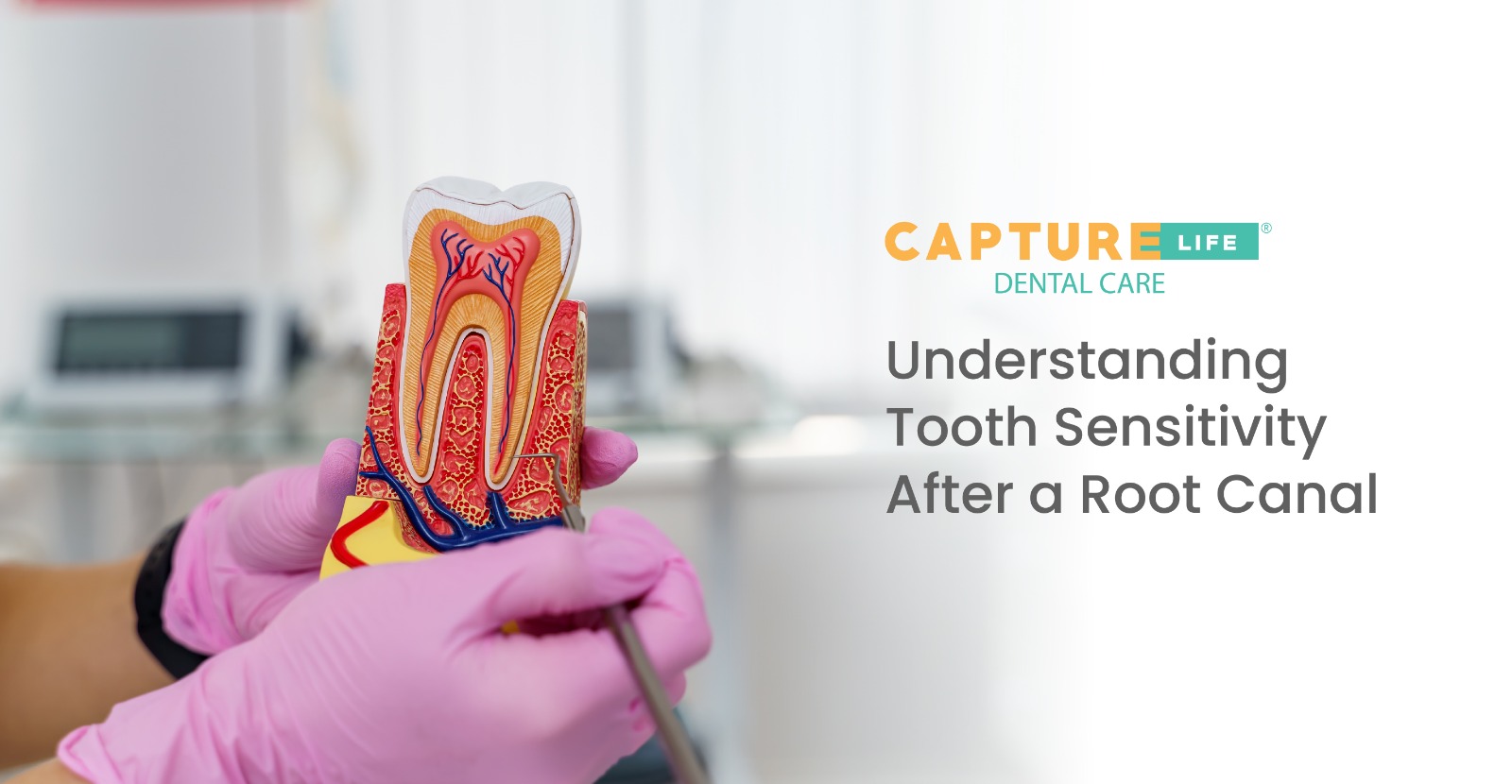
13 Jan Understanding Tooth Sensitivity After a Root Canal
A root canal is designed to relieve pain, not create it. Yet many patients experience tooth sensitivity after the procedure and wonder if something has gone wrong. In most cases, this sensitivity is a normal part of healing and not a sign of failure.
Understanding why sensitivity occurs helps patients follow the right oral care, practice better oral hygiene, and protect long-term teeth care after treatment.
Why Sensitivity Occurs After a Root Canal
During a root canal, the infected pulp inside the tooth is removed, and the canals are cleaned and sealed. Although the nerve is removed, the surrounding tissues, ligaments, bone, and gums, still need time to heal.
According to the American Association of Endodontists, post-treatment sensitivity is commonly caused by inflammation of the tissues around the tooth rather than the tooth itself.
Common Types of Sensitivity
Patients may notice sensitivity in different ways:
- Mild discomfort while chewing
- Tenderness when biting down
- Sensitivity to hot or cold
- General soreness around the treated tooth
These symptoms usually reduce within a few days to a couple of weeks as healing progresses.
Factors That Can Prolong Sensitivity
Sensitivity may last longer in certain situations:
- Deep infection before treatment
- Inflammation in surrounding tissues
- High bite or uneven crown placement
- Delayed placement of a permanent crown
The Cleveland Clinic notes that pressure sensitivity can persist if the tooth is not fully protected with a final restoration.
This is why follow-up care is a crucial part of dental care.
How to Manage Sensitivity at Home
Proper post-treatment habits play a key role in recovery:
- Avoid chewing on the treated side until advised
- Use a soft-bristled toothbrush
- Maintain gentle but consistent oral hygiene
- Avoid extremely hot, cold, or hard foods
Over-the-counter pain relief may be recommended, but always follow your dentist’s advice.
When Sensitivity Is Not Normal
While mild discomfort is expected, persistent or worsening pain is not. You should contact your dentist if:
- Pain lasts longer than two weeks
- Swelling or pus develops
- Pain increases instead of improving
- The tooth feels unstable or painful when biting
A qualified dental specialist in Banjara Hills can assess whether further treatment or bite adjustment is needed.
The Role of Professional Follow-Up
Regular reviews at experienced dental clinics ensure healing is on track. X-rays may be taken to confirm bone healing and the integrity of the root canal seal.
Maintaining routine oral care and professional cleanings helps prevent reinfection and protects surrounding teeth.
Conclusion
Tooth sensitivity after a root canal is usually temporary and part of the natural healing process. With proper dental care, disciplined oral hygiene, and timely follow-ups, most patients experience complete relief and long-term success.
If you’re experiencing post-root canal sensitivity or have concerns about your recovery, consult Capture Life Dental Care, a trusted dental specialist in Banjara Hills committed to precise treatment, comfort, and lifelong teeth care.